RG Foundations
Responsible gambling brings together information, player tools, protections, and support. This module introduces the Engagement Gap, the Information Gap, and the two-tier system. These concepts help you distinguish the task at hand and choose the right register: Tier 1 entertainment literacy or Tier 2 support.
Operator note: Replace
{{PROGRAM_NAME}}with your program name throughout. The RG framework, the informed-choice premises, and the two-tier model are part of the brand system and should not be modified — they’re the foundation every later module builds on. What you do customize lives in_brand.yml: program names, helpline details, and the integration links to your own compliance and support programs. Narrator scripts should be recorded in the Playbook Tier 1 voice unless a section is marked Tier 2.
Program: Brand Foundations | Duration: ~20 min | Prerequisites: None
Quick-scan index
| Section | What it covers | Time |
|---|---|---|
| Learning objectives | What you’ll know after this module | — |
| Section 1: What does RG actually mean? | RG definition, three stakeholder perspectives, the engagement gap | ~7 min |
| Section 2: The Information Gap | Informed choice model, four premises, three complementary layers | ~7 min |
| Section 3: The Two-Tier System | Tier 1 vs Tier 2, behavioral indicators, and context-sensitive voice | ~4 min |
| Module test | 5 graded questions, 80% to pass | ~2 min |
| Key takeaways | Summary | — |
| References | Links to Playbook brand assets | — |
Learning objectives
After completing this module, you will be able to:
- Explain the three-layer RG framework — and why {{PROGRAM_NAME}} is built on the third one, not the first two
- Describe the Information Gap, and use it to counter the most common objection a colleague will raise
- Classify any piece of player-facing content as Tier 1 or Tier 2 — context, not topic, is the deciding factor
Why this matters: You’re the one who briefs the designer, writes the first draft, or signs the piece off. Every later module in this program — visual, voice, segments, journey, measurement — assumes you already know which layer {{PROGRAM_NAME}} works at and which tier a piece belongs to. Get this foundation wrong and the error propagates into everything you build on top of it. Get it right and the rest of the program clicks into place.
Think about this: Picture the last “Play Responsibly” message you saw — a footer line, a warning box, a leaflet by the door. Did anyone you know ever stop and actually read it? Hold that picture. By the end of this module, you’ll know exactly why it failed, and what it would take to fix it.
Section 1: What does RG actually mean?
Reading
“Responsible gambling” is one of the most used phrases in the industry. It’s also one of the least useful. Everyone says it. Few define it. Let’s fix that.
Players, regulators, operators, and researchers can use the phrase differently. Clear content starts with a shared definition.
For this brand framework, the central purpose is:
Helping players manage how they spend their time and money on gambling.
That’s the through-line. Every compliance framework, every helpline number, every piece of educational content, every tool — they all exist to serve that single goal. But different stakeholders come at it from very different angles, and understanding those angles is what separates surface-level RG knowledge from the kind that actually shapes content decisions. Three perspectives, one goal.
The public perspective is awareness and accountability. For the general public and advocacy groups, RG means the industry takes genuine responsibility for the product it sells. Gambling companies shouldn’t just profit from entertainment — they should make sure people understand what they’re buying. The public expects transparency (what are the real odds?), accessible support (not a helpline number buried in a footer), and genuine effort — not a checkbox exercise. This perspective shapes reputation: an operator that treats RG as a compliance cost eventually faces a trust problem — with regulators, with media, and with the players who notice the gap between marketing promises and educational reality.
The regulator perspective is standards and compliance. For regulators, RG means enforceable standards. Helpline numbers displayed correctly. Self-exclusion flows that work. Advertising that doesn’t target vulnerable populations. Age verification. Mandatory messaging. Compliance is the floor — the minimum every operator must meet, regardless of their broader approach to player education.
The consumer perspective is informed choice. For the player, RG means having the information and tools to make good decisions: understanding the odds before you bet, knowing how long you’ve been playing, and being able to set limits that actually work. Players don’t want to be lectured. They don’t want to be treated as patients. They want to be equipped. This is where {{PROGRAM_NAME}} lives — giving players the information they need to make their own choices well. Think about it from the player’s seat: you chose to spend your entertainment budget on gambling. You’re a competent adult who made a deliberate choice. What you need isn’t a warning — it’s useful information. How does the house edge affect your bankroll over time? What does a 40x wagering requirement actually cost? How do parlay odds compound? {{PROGRAM_NAME}} answers those questions.
Now the problem. Every major gambling operator invests heavily in commercial content — sleek apps, polished advertising, generous bonuses designed by entire teams of marketers, designers, and copywriters. World-class creative. And their player education content? A wall of text buried in the footer. Written by compliance. Designed by nobody. Read by no one.
The Engagement Gap is the difference between the quality of an operator’s commercial content and the quality of their player education content. For most operators, it’s enormous — and players notice instantly.
This gap often exists because player education has been treated as a compliance problem, not a marketing communications challenge. It typically lives outside marketing — owned by legal, compliance, or external program providers. Those teams ensure requirements are met. But they’re not resourced to build brands, write copy that people want to read, or create campaigns players actually interact with.
The result: content that satisfies the regulator but fails the player. A tiny helpline number in 10px gray text. A “Play Responsibly” tagline that nobody has ever read and thought, “I should pay attention to this.” A self-exclusion option buried four clicks deep in account settings. The content is present. It is also functionally invisible.
Player education is a marketing communications challenge, not a compliance requirement.
If you treat player education with the same creative investment, brand thinking, and production quality as commercial content, players will engage with it to the same level as all marketing communications. Not because they’re forced to, but because it’s genuinely worth their time.
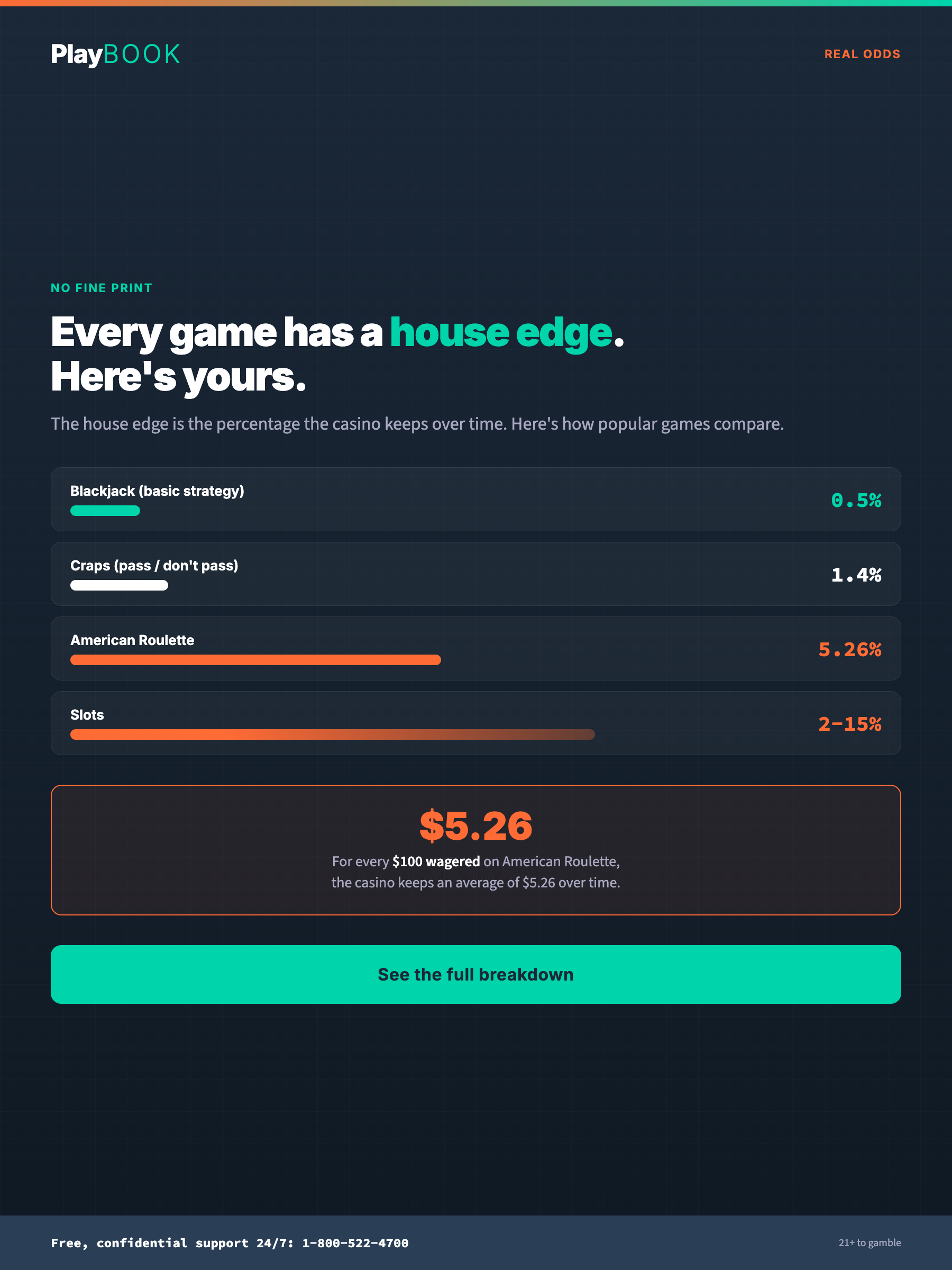
{{PROGRAM_NAME}} is the tool that makes this possible — an open-source brand system any operator can adopt, adapt, and deploy under their own brand to close the engagement gap.
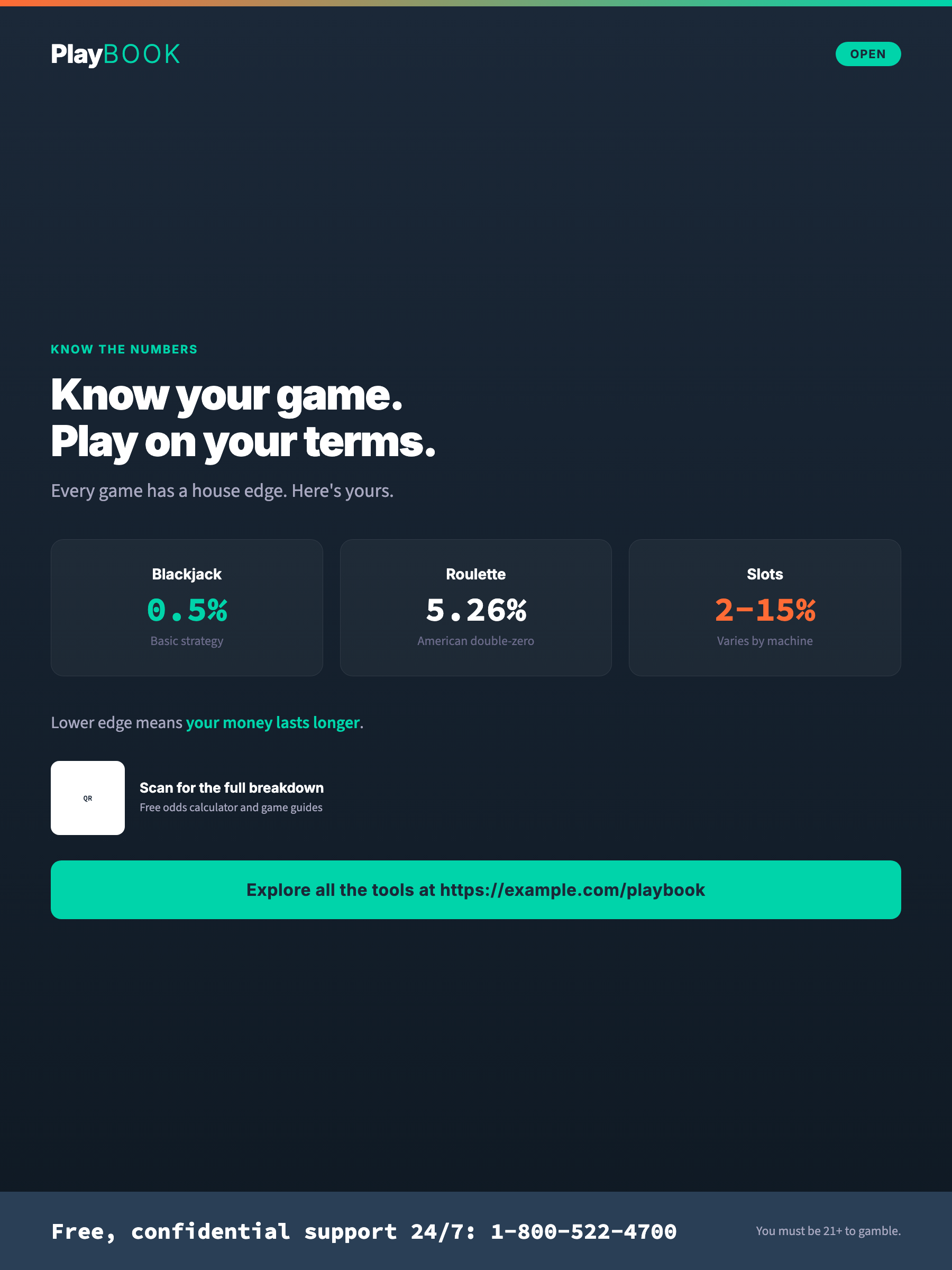
Narrator Script
Narrator: [transition slide] What does responsible gambling actually mean? It’s one of the most used phrases in the industry — and one of the least understood. Ask ten people and you’ll get ten answers.
[pause 5s]
That ambiguity isn’t harmless. When a phrase means everything, it means nothing. So let’s nail it down. At its core, responsible gambling means helping players manage how they spend their time and money on gambling. That’s the through-line.
[show three-stakeholders diagram] Every compliance framework, every helpline number, every piece of educational content exists to serve that single goal. But different stakeholders come at it from very different angles. The public expects transparency, accessible support, and genuine effort — not a checkbox exercise. Regulators set the compliance floor — helpline numbers, self-exclusion flows, age verification, mandatory messaging. And consumers — the players — want the information and tools to make good decisions. They don’t want to be lectured. They want to be equipped. This is where {{PROGRAM_NAME}} lives — giving players the information they need to make their own choices well.
[pause 2s] Before we move on, a quick gut-check. I’ll show you three pieces of real responsible-gambling content — the kind you’ve seen a hundred times — and each one is missing something. See if you can spot the gap in each, then continue.
[pause 3s]
[show engagement-gap split] Now here’s the problem {{PROGRAM_NAME}} exists to solve. Every operator invests heavily in commercial content — sleek apps, polished ads, generous bonuses. World-class creative. And their player education content? A wall of text buried in the footer. Written by compliance. Designed by nobody. This is the engagement gap — the gulf between the quality of commercial content and the quality of player education. {{PROGRAM_NAME}} closes that gap by treating player education as a marketing communications challenge, not a compliance requirement.
Section 2: The Information Gap
Reading
Quick recall from Section 1. The Engagement Gap is why traditional RG content fails to reach players — it’s been built like compliance instead of like marketing. This section moves to the demand side: what players actually need to know once you do reach them. That’s the Information Gap.
Most operators give players rules. Very few give them understanding. The gap between what operators know about their products and what players know is where problems develop — and where {{PROGRAM_NAME}} does its work.
Gambling is a complicated product. Think about what a player actually faces. Every gambling product involves probability, expected value, house edge, variance, and game-specific mechanics, and none of it is intuitive. A -110 betting line. A 35:1 roulette payout. A 96% RTP on a slot machine. These numbers carry real financial meaning, but most players can’t decode them without help — not because players are foolish, but because gambling products are genuinely complex and the information needed to understand them hasn’t been made accessible.
Information asymmetry: Operators understand the math behind their products deeply — their business model depends on it. Players generally don’t. This Information Gap means players can’t make fully informed choices, which makes them less likely to keep playing and more likely to put themselves at risk. Reducing that gap is {{PROGRAM_NAME}}‘s core job — and the reason this entire framework exists.
When people face complex decisions without adequate information, they make worse choices. That’s true for financial products, healthcare, insurance — and gambling. The solution isn’t to prevent people from making choices. It’s to close the Information Gap so they can choose well.
What players actually need. The informed choice model says players need three things to make good decisions: how to play (the rules, the mechanics, the basics of the game), how the game works (the math behind it — house edge, odds, RNG, expected value, variance), and where risks exist (what can go wrong, and how tools and features can help manage it). Most operators cover the first. Some attempt the second. Almost nobody does the third well. That third gap is exactly where problems develop.
The four premises of informed choice. The practical starting point is that accurate product information and usable tools can improve the conditions for informed choice. They are important parts of a wider system that also includes safeguards and support. The framework rests on four premises:
-
Most people who gamble do so without problems. The vast majority of players gamble recreationally, within their means, and without developing difficulties. This is the norm, not the exception. Content should be designed for them — the majority — not exclusively for a small percentage who develop difficulties.
-
Gambling is entertainment. It’s a leisure activity with a cost — the house edge. Understanding that cost doesn’t ruin the experience. It makes it more informed. Like knowing the price of a movie ticket before you buy it. (Note: advertised house edge figures like blackjack’s ~0.5% assume optimal play strategy — most players face a higher effective edge.)
-
Information and tools can support informed choice, but they are not sufficient on their own. Gambling-related difficulty can have multiple pathways, so safeguards and support remain essential parts of the system.
-
Responsibility is shared across multiple stakeholders. Players make their own choices — and that autonomy matters. Operators provide accurate information and effective tools. Regulators set standards. Support services exist for those who need them. No single party bears the entire burden.
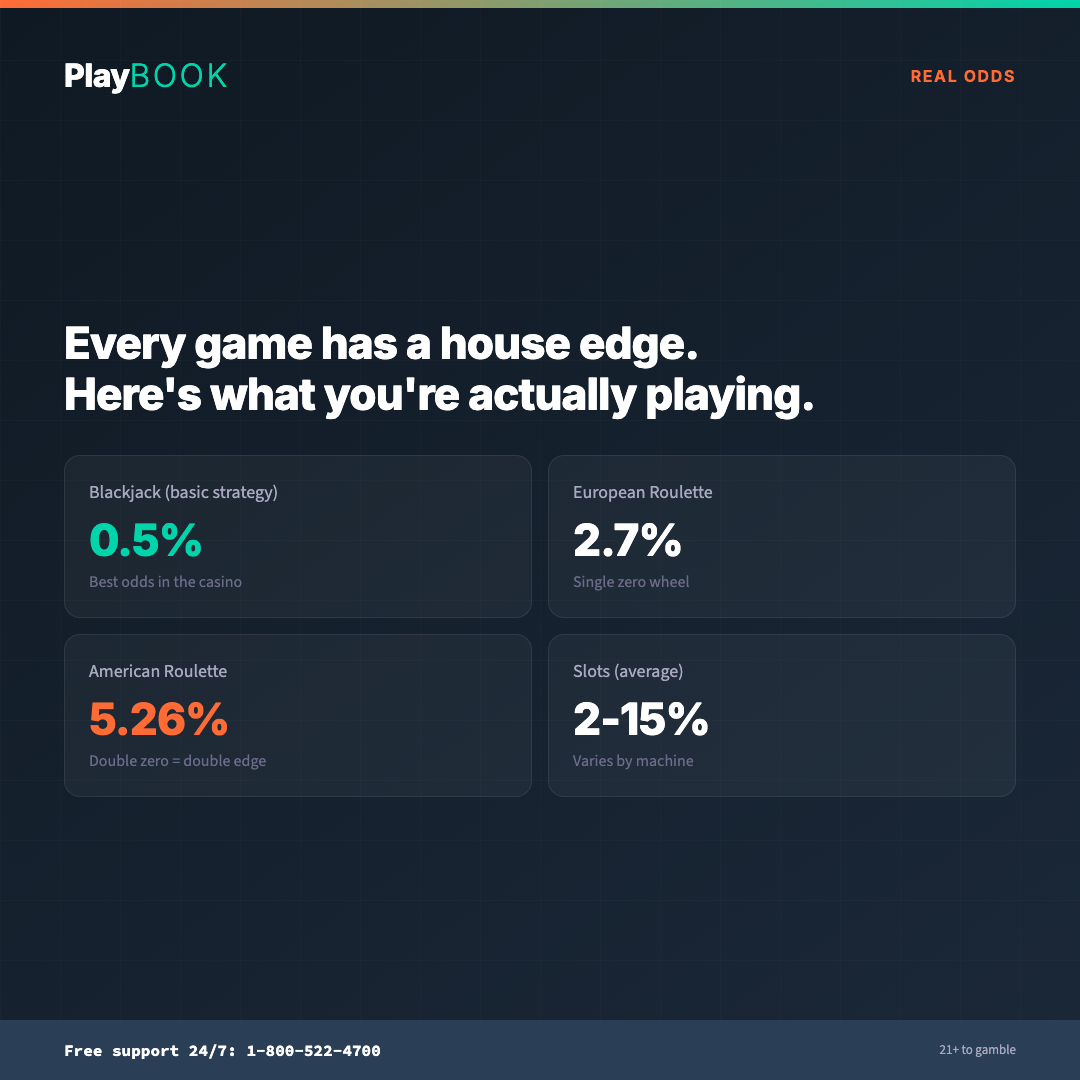
Where the model comes from. The informed choice framework isn’t an invention of the gambling industry. It draws on established ideas from three fields. Consumer psychology — decades of research show people make better purchasing decisions when product information is comprehensible, accessible, and honest; give players clear information about how a product works, and most self-regulate. Economic adverse selection — when one party in a transaction knows far more than the other (operators understand probability, variance, and house edge; most players don’t), the Information Gap leads to poor outcomes, so closing it is a market-efficiency argument, not a moral one. Liberal ethics — the model sits at the intersection of personal liberty and duty of care: pure paternalism (“protect players from themselves”) removes autonomy, pure laissez-faire (“they chose to play”) ignores the Information Gap, and informed choice is the middle path that equips people to make their own decisions, then respects those decisions.
Three layers, not three alternatives. The industry often presents RG approaches as competing models — you’re either a compliance shop, a public health advocate, or an informed choice operator, so pick one. That’s wrong. They’re complementary layers, and an operator needs all three:
- Compliance is non-negotiable, and it’s the floor every operator meets regardless of strategy. It’s driven by regulators and legislators, and it covers helpline display, age verification, self-exclusion, and mandatory messaging.
- Public Health addresses population-level outcomes and shapes the environment everything else operates in. It’s driven by regulators and public institutions, and it covers prevalence research, advertising restrictions, treatment funding, and harm monitoring.
- Informed Choice is where {{PROGRAM_NAME}} lives. It’s the operator-driven content strategy that empowers individual players to manage their time and money, and it covers odds education, tools-as-features, myth-busting, and game guides.
{{PROGRAM_NAME}} doesn’t replace compliance or dismiss public health. It operates at the informed choice layer while respecting the others. When you deploy {{PROGRAM_NAME}}, your compliance requirements are still met — the difference is that the content around those requirements is now worth reading.
Operator integration point: Your compliance and public-health obligations live outside {{PROGRAM_NAME}} and vary by jurisdiction. {{PROGRAM_NAME}} sits on top of them at the informed-choice layer — it never overrides a mandatory standard. Link your organization’s regulatory-mandated training and compliance program here so learners can see where the floor is set: Regulatory-Mandated Training · Internal Policies
Narrator Script
Narrator: [transition slide] The Informed Choice Model. Gambling is a complicated product. Every game involves probability, expected value, house edge, variance, and game-specific mechanics. A minus-110 betting line, a 35-to-1 roulette payout, a 96% RTP on a slot machine — these numbers carry real financial meaning, but most players can’t decode them without help.
[show information-gap diagram] Operators understand this math deeply — their business model depends on it. Players generally don’t. This Information Gap means players can’t make fully informed choices — and that means they’re more likely to put themselves at risk. Closing that gap is {{PROGRAM_NAME}}‘s core job.
[show four-premises grid] The informed choice framework rests on four premises. First, many people who gamble do so as entertainment. Second, gambling has a cost — the house edge — and understanding that cost supports a more informed choice. Third, information and tools matter, but they work inside a wider system of safeguards and support. And fourth, responsibility is shared across players, operators, regulators, and support services.
[pause 3s]
Where does this come from? Three fields. Consumer psychology shows people make better purchasing decisions when product information is clear and honest. Economic adverse selection tells us that when one party knows far more than the other, outcomes suffer. And liberal ethics — the balance between personal liberty and duty of care. Informed choice is the middle path: equip people to make their own decisions, then respect those decisions.
[show three-layers stack] Three complementary layers work together. Compliance sets the floor — mandatory standards every operator meets. Public health addresses population-level outcomes — prevalence research, advertising restrictions, harm monitoring. And informed choice empowers individual consumers through education and tools. These aren’t competing alternatives. {{PROGRAM_NAME}} operates at the informed choice layer while respecting the others.
Exercise: Classify the Layer
Type: scenario
Instructions: Each item belongs to one of the three complementary RG layers: Compliance, Public Health, or Informed Choice. For each one, pick the layer it belongs to. Think about who drives the action and what outcome it serves.
| Item | Correct Category | Feedback Correct | Feedback Incorrect |
|---|---|---|---|
| Helpline number in footer | Compliance | Correct — displaying a helpline number is a regulatory requirement that every operator must meet regardless of strategy. | This is a mandatory regulatory requirement, not an educational or population-level initiative. It belongs in the Compliance layer. |
| National prevalence study | Public Health | Correct — prevalence research monitors population-level gambling outcomes and is driven by regulators and public institutions. | Prevalence studies track gambling patterns across entire populations — that’s Public Health, not individual empowerment or operator compliance. |
| Interactive odds calculator | Informed Choice | Correct — an odds calculator empowers individual players with information to make better decisions. This is exactly where {{PROGRAM_NAME}} operates. | An odds calculator is a consumer-facing tool that helps individual players understand the math — that’s Informed Choice, not a regulatory mandate or population study. |
| Age verification check | Compliance | Correct — age verification is a mandatory regulatory requirement. It’s the compliance floor every operator must meet. | Age verification is legally required before a player can gamble — that’s a non-negotiable compliance standard, not education or population research. |
| Advertising restriction policy | Public Health | Correct — advertising restrictions are population-level measures set by regulators to reduce broad exposure to gambling marketing. | Advertising restrictions protect the general population from excessive gambling promotion — that’s a Public Health measure driven by regulators, not individual education or operator compliance checks. |
| Session time reminder tool | Informed Choice | Correct — a session reminder is a player-facing tool that helps individuals manage their play. It equips rather than restricts. | A session reminder empowers the player to manage their own time — that’s an Informed Choice tool, not a regulatory mandate or population-level intervention. |
Section 3: The Two-Tier System
Reading
The informed choice model makes a critical assumption: that players are making rational decisions. For the vast majority, that holds. But not always.
When informed choice isn’t enough. Support and crisis situations require a different register. Some players may understand the information and still describe difficulty, impaired control, or distress. Information alone does not answer that moment. They need a response centered on immediate access to support, self-exclusion options, and professional help. This is why {{PROGRAM_NAME}} operates on two tiers.
The two tiers. Same brand, two registers — here’s how they line up:
| Tier 1: Entertainment Literacy | Tier 2: Support & Crisis | |
|---|---|---|
| Use | Routine education and tool moments | Difficulty, distress, support, and crisis moments |
| Assumption | Rational decision-making with good information | Players in difficulty — loss of control, impulse, cognitive distortion |
| Goal | Equip players with knowledge and tools | Connect to support with zero friction |
| Tone | Confident, witty, informative | Warm, direct, zero judgment |
| Content | Odds education, game guides, myth-busting, quizzes, tools-as-features | Helplines, self-exclusion, cooling-off, crisis referrals |
| Feel | “Here’s how the game actually works.” | “We’re here. No judgment. Here’s help.” |
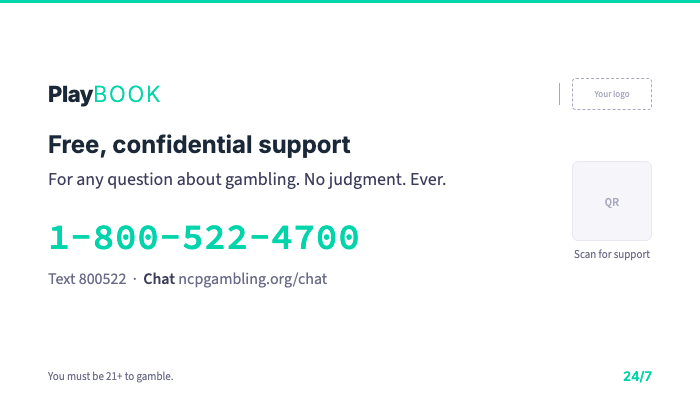
Recognizing the shift. How do you know when a player has moved from Tier 1 territory into Tier 2? You look for behavioral indicators — observable patterns that suggest a player’s behavior may not align with their intentions: escalating deposits (spending more over time, especially after losses), chasing losses (increasing bets to recover previous ones), increasing session length and frequency (playing longer and more often), repeated limit increases (raising self-imposed limits shortly after hitting them), and searching for support content (visiting helpline pages, searching “self-exclusion”). Notice what’s not on that list: clinical diagnostic criteria. Players don’t self-diagnose from clinical criteria, and operators aren’t qualified to apply them. What works is behavioral description — language like “spending more than you planned” rather than “persistent and recurrent problematic gambling behavior.”
Why the balance matters. Routine player education should not sound like crisis prevention; that makes useful information feel clinical and easy to ignore. {{PROGRAM_NAME}} keeps Tier 1 content engaging enough that players choose to use it, while making Tier 2 support easy to reach from any Tier 1 context. The right mix is determined by the audience, channel, and moment—not a fixed ratio.
Think of it like a sports venue. The game, the atmosphere, the food — that’s Tier 1. The first aid station and exit signs — that’s Tier 2. Both are essential. Both save lives. But the venue is designed around the experience, not around the exits. And critically: the exits are always clearly marked.
The non-negotiable rule. Tier 2 is always accessible. The helpline number, self-exclusion link, and support resources must be reachable from every Tier 1 context — a player reading a myth-busting article should be able to find support in one tap. But the article itself should never be framed as a warning or intervention. This is the design principle that holds the two tiers together: engaging content for the majority, with immediate access to support for anyone who needs it, at any moment. No mixing. No compromise. Both, simultaneously.
Narrator Script
Narrator: [transition slide] The Two-Tier System. The informed choice model makes a critical assumption: that players are making rational decisions. For the vast majority, that holds. But not always.
Some players gamble in ways that suggest difficulty — not because they lack information, but because impulse, habit, or loss of control overrides their ability to act on what they know. A player who understands house edge intellectually may still chase losses when emotions take over. Information alone doesn’t fix this. It’s a fundamentally different problem. That’s why {{PROGRAM_NAME}} operates on two tiers.
[show Tier 1/2 comparison] Tier 1 is the routine education register. It equips players with knowledge and tools — limits, reminders, odds education, myth-busting, and game guides — in an engaging voice. Tier 2 is the support register for moments involving difficulty, distress, or a request for help. It is warm, direct, stripped of decoration, and focused on connecting the person with the right support. Choose the tier from the moment, not a quota.
[pause 5s] How do you know when a player has moved from Tier 1 into Tier 2? You look for behavioral indicators — escalating deposits, chasing losses, increasing session length, repeated limit increases, or searching for support content. Notice what’s not on this list: clinical diagnostic criteria. Players don’t self-diagnose from clinical checklists. What works is behavioral description — language like spending more than you planned rather than clinical terminology.
[pause 3s]
Most operators get the ratio backwards. They treat all player education as crisis prevention — making it feel clinical and irrelevant to the majority. {{PROGRAM_NAME}}‘s approach: make Tier 1 content so genuinely engaging that players choose to interact with it, while Tier 2 support stays always one tap away. Both tiers are essential. And the non-negotiable rule: Tier 2 is always accessible from any Tier 1 context.
[pause 2s] One more before the test. Take a single touchpoint and flip it between the two tiers — watch how the same message changes the moment a player might need support. Toggle through it, then continue.
Module Test
Narrator: [transition slide] Time to check what you’ve learned. Five questions, covering responsible gambling foundations, the informed choice model, and the two-tier system. You need 80% — that’s four out of five — to mark this module complete. Take your time. If you don’t pass on the first try, you can review the material and retake the test.
Question 1
Assesses: Learning objective 1
Stem: What does “responsible gambling” ultimately mean in practice?
| Option | Text |
|---|---|
| A | Preventing people from gambling |
| B | Helping players manage how they spend their time and money on gambling |
| C | Operators disclosing their profit margins |
| D | Requiring players to pass a quiz before they can bet |
Correct: B
Explanation: At its core, RG is about helping players manage their time and money. Everything else — compliance frameworks, educational content, tool design — serves that goal. Different stakeholders approach it differently, but the outcome is the same: players who can make informed decisions about their play.
Source: Introduction
Question 2
Assesses: Learning objective 1
Stem: In the layered model, what is the relationship between Compliance, Public Health, and Informed Choice?
| Option | Text |
|---|---|
| A | They are competing approaches — operators must choose one |
| B | They are complementary layers — Compliance is the floor, Public Health is the population lens, Informed Choice is individual empowerment |
| C | Informed Choice replaces the need for Compliance |
| D | Public Health is only relevant for regulators, not operators |
Correct: B
Explanation: These three aren’t competing alternatives. Compliance is the mandatory floor every operator must meet. Public Health addresses population-level outcomes. Informed Choice empowers individual decision-making through information and tools. {{PROGRAM_NAME}} operates at the Informed Choice layer while respecting the others.
Source: Brand Foundation
Question 3
Assesses: Learning objective 2
Stem: Why is gambling described as a “complicated product”?
| Option | Text |
|---|---|
| A | Because the rules are hard to learn |
| B | Because the math behind odds, house edge, and probability isn’t intuitive — and operators have more information than players |
| C | Because there are too many games to choose from |
| D | Because regulations vary by jurisdiction |
Correct: B
Explanation: Gambling involves probability, expected value, house edge, and game mechanics that aren’t intuitive for most people. Operators understand these deeply; players often don’t. This Information Gap means players can’t make fully informed choices without education — which is exactly what {{PROGRAM_NAME}} provides.
Source: Brand Foundation
Question 4
Assesses: Learning objective 3
Stem: What is the fundamental distinction between Tier 1 and Tier 2 content?
| Option | Text |
|---|---|
| A | Tier 1 is for new players, Tier 2 is for experienced players |
| B | Tier 1 assumes rational decision-making with good information; Tier 2 addresses players in difficulty |
| C | Tier 1 is optional, Tier 2 is mandatory |
| D | Tier 1 is digital, Tier 2 is in-person |
Correct: B
Explanation: Tier 1 is the routine education and tool register. Tier 2 is the support register for difficulty, distress, or requests for help. The situation determines the register; there is no fixed content ratio.
Source: Voice and Tone
Question 5
Assesses: Learning objective 2
Stem: What is the “engagement gap” that {{PROGRAM_NAME}} addresses?
| Option | Text |
|---|---|
| A | The gap between how much players gamble and how much they should |
| B | The gap between the quality of commercial content and the quality of player education content |
| C | The gap between online and land-based gambling experiences |
| D | The gap between what regulators require and what operators provide |
Correct: B
Explanation: The engagement gap is the disconnect between the billions spent on commercial content (sleek, engaging, on-brand) and the near-zero investment in player education (buried in footers, written by compliance). {{PROGRAM_NAME}} closes that gap by treating player education as a marketing communications challenge.
Source: Introduction
Key Takeaways
- RG means helping players manage their time and money. Three stakeholders see this differently — public (accountability), regulators (standards), consumers (informed choice) — and {{PROGRAM_NAME}} serves all three by empowering the consumer with the information they need.
- The engagement gap between commercial content quality and education content quality is the specific problem {{PROGRAM_NAME}} exists to solve.
- Gambling is a complicated product with an Information Gap between operators and players. The informed choice approach closes that gap by giving players what they need: how to play, how the game works, and where risks exist.
- Compliance, Public Health, and Informed Choice are complementary layers — not competing alternatives. {{PROGRAM_NAME}} operates at the Informed Choice layer.
- Tier 1 is the routine education and tool register. Tier 2 is the support register for difficulty, distress, or requests for help. Choose from the moment, not a quota.
- Use behavioral indicators (not clinical criteria) to recognize the shift. And the non-negotiable: Tier 2 support is always one tap away from any Tier 1 context.
Source basis
You don’t need to read these but they’re published research related to the module’s framework — in case a colleague asks.
- Blaszczynski, A., Ladouceur, R., & Shaffer, H.J. (2004). A science-based framework for responsible gambling: The Reno Model. Journal of Gambling Studies, 20(3), 301-313. Why it’s here: the original statement of the informed-choice model — the four premises {{PROGRAM_NAME}} builds on.
- Akerlof, G.A. (1970). The market for “lemons”: Quality uncertainty and the market mechanism. Quarterly Journal of Economics, 84(3), 488-500. Why it’s here: the canonical statement of the adverse-selection problem — the economic backbone of the Information Gap argument.
- Calado, F. & Griffiths, M.D. (2016). Problem gambling worldwide: An update and systematic review of empirical research (2000-2015). Journal of Behavioral Addictions, 5(4), 592-613. Why it’s here: a global systematic review of problem-gambling prevalence — the empirical baseline the informed-choice model rests on (the substantial majority of players gamble without difficulty), with broader geographic coverage than any single-jurisdiction study.
References
| Resource | What to use it for |
|---|---|
| Introduction | The engagement gap, the {{PROGRAM_NAME}} approach |
| Brand Foundation | The informed-choice framework, the four premises, the three complementary layers |
| Voice and Tone | The two-tier system, tier registers, behavioral indicators |
Spot the Gap
What’s wrong in the Before version? Click each gap to reveal the explanation.
Tier Toggle
Compare Tier 1 and Tier 2 to see how the same touchpoint changes when a player may need support.
Set your entertainment budget
Most players find it helpful to set a weekly budget. Think of it like a movie subscription — the cost of having fun.
Set my budgetTier 1 note: This is the default tone. Confident, informative, non-clinical. The deposit limit nudge is framed as a feature of the experience — not a warning bolted onto it.