Voice & Tone
A consistent voice helps player education sound like one person talking to another. This module introduces {{PROGRAM_NAME}}’s voice traits, tone registers, and stigma-free language. You will learn how to adapt the expression to the audience and situation while keeping the brand’s character recognizable.
Operator note: Replace
{{PROGRAM_NAME}}with your program name throughout. The voice dimensions, the stigma-free swaps, and the tone registers are part of the brand system and should not be modified. What does change market to market is the expression — how blunt, how cheeky — and Section 4 shows you exactly how far that can flex before it stops being {{PROGRAM_NAME}}. Narrator scripts should be recorded in the Playbook Tier 1 voice unless a section is marked Tier 2.
Program: Brand Foundations | Duration: ~25 min | Prerequisites: Visual Identity & Design
Quick-scan index
| Section | What it covers | Time |
|---|---|---|
| Learning objectives | What you’ll know after this module | — |
| Section 1: The Voice | Voice traits, what the voice is not, five voice dimensions | ~7 min |
| Section 2: Stigma-Free Language | The 10 essential swaps, phrases to retire | ~6 min |
| Section 3: Tone Spectrum & Practice | Four tone registers, matching registers to context | ~6 min |
| Section 4: Cultural Adaptation | Brand DNA vs brand expression, humor register, directness level | ~4 min |
| Module test | 5 graded questions, 80% to pass | ~2 min |
| Key takeaways | Summary | — |
| References | Links to Playbook brand assets | — |
Learning objectives
After completing this module, you will be able to:
- Write a paragraph using the five {{PROGRAM_NAME}} voice dimensions — and spot when one is missing
- Apply the 10 core stigma-free substitutions in your own first draft, not the editor’s
- Decide the right tone register from context cues, not from topic cues
- Adapt voice and tone for different cultural markets without losing the brand’s core directness
Why this matters: You’re the one writing it — and the one signing it off. The visual rules from the last module are checkable with a ruler and a contrast tool. Voice isn’t. The only thing standing between a clinical, finger-wagging draft and a {{PROGRAM_NAME}} one is a writer who can hear the difference. This module trains your ear so you can write on-brand the first time and fix anyone else’s copy on sight.
Think about this: Picture the last “responsible gambling” line you read in the wild — a banner, a footer, a pop-up. Read it back in your head. Did it sound like a person you’d want to sit next to, or like a form? Hold that voice. By the end of this module, you’ll be able to name exactly what’s wrong with it — and rewrite it.
Section 1: The Voice
Reading
Quick recall from RG Foundations. Tier 1 is entertainment literacy — confident, informative, sometimes witty. Tier 2 is support and crisis — warm, direct, humor off. The voice is one person across both; only the register shifts. RG Foundations covered when each tier applies. This section covers who that person actually is.
Most player education content has no personality. It reads like it was written by a committee of lawyers told to “make it sound helpful” — generic, cautious, and forgettable. {{PROGRAM_NAME}} sounds like somebody. This lesson tells you who.
At the table, not in the booth. The {{PROGRAM_NAME}} voice isn’t above you. It’s at the table with you. It knows the odds, it’s read the fine print, and it understands the mechanics behind every game — but it doesn’t lecture, doesn’t wag a finger, and doesn’t treat you like a student or a patient. It treats you like a smart adult who deserves the full picture.
The personality test: Picture someone at a poker table who knows the odds, calls out the myths, keeps the game fun — and quietly has the number for support if you ever need it, but won’t bring it up unless you hint at needing it. Does your content sound like it was written by that person? If yes, ship it.
Five voice traits describe who that person is:
- Knowledgeable — Knows the math — house edge, RNG, probability — but explains it like something interesting at a bar, not a research paper.
- Confident — Doesn’t hedge or equivocate. Knows what it’s talking about — but never makes you feel stupid for not knowing already.
- Generous — Shares because you should have it, not because a rule says to. Information is better when it’s shared.
- At the table — The perspective comes from inside the experience, not from outside looking in. It treats gambling as entertainment, not as a lab subject.
- Non-judgmental — Will tell you your “system” doesn’t work — but never in a way that makes you feel stupid for trying it.
What the voice is NOT is just as useful to hold onto. {{PROGRAM_NAME}} is a peer in conversation — not a teacher running a class, not a doctor handing down a prescription, not a parent setting rules, and not a killjoy who’d rather you didn’t play. It shares; you decide. It trusts you to be an adult. It treats gambling as fun, with eyes open.
The five voice dimensions turn those traits into writing decisions. Each has a default setting and a boundary. Use all five to shape content for the situation.
Dimension 1 — Voice: how the brand sounds. {{PROGRAM_NAME}} sounds like a peer — someone at the table with you. Confident, conversational, no credentials cited. Not an authority lecturing from a podium, not a clinician reading from a chart. Trust is built through relatability, not titles. The tell: “Here’s how it works” is peer voice. “Many players don’t realize…” is authority voice pretending to be helpful — the first shares information, the second implies the reader is behind.
Authority / Clinical: “Contrary to what many players believe, slot machine outcomes are determined by random number generators, not by previous results.”
Peer: “Here’s how slot machines actually decide what to show you. It’s called RNG, and it’s more interesting than you’d think.”
Dimension 2 — Framing: how information is presented. {{PROGRAM_NAME}} frames information as a personal opportunity, not a collective warning: “your bankroll,” “your odds,” “your decision.” The reader is an autonomous adult making choices, not a patient receiving a diagnosis. The tell: frame benefits as things the reader gains, not harms the reader avoids. “Know the odds so you can play smarter” is opportunity. “Be aware that gambling can lead to financial harm” is warning.
Warning framing: “Be aware that continued gambling may result in financial losses that exceed your budget.”
Opportunity framing: “Set a budget before you play. Decide what you’re comfortable spending — and stop when you reach it. Your bankroll, your call.”
Dimension 3 — Humor: how and when wit is used. {{PROGRAM_NAME}} uses humor to earn attention and make information stick. It does not use moral authority to lecture players about what they should do. In Tier 1 content (education, social, quizzes), the default register is irreverent. In Tier 2 content (support, crisis, take-a-break), humor drops to zero. The tell: humor points at myths, misconceptions, and the absurdity of superstitions — never at players who are struggling.
Preachy: “Players should be aware that no gambling system can overcome the mathematical house advantage in the long run.”
Witty: “Think you’ve got a ‘system’ that beats the house? Cool. The house has a system too. It’s called math. Let’s compare notes.”
Dimension 4 — Directness: how blunt or soft the delivery is. {{PROGRAM_NAME}}‘s default is blunt. It states conclusions plainly and backs them with evidence — no softening, no hedging. “This bet is terrible. Here’s why.” The reader gets the facts first and decides what to do with them. The tell: blunt is honest and clear; harsh is judgmental. “This is one of the worst bets on the floor” is blunt. “Only a fool would take this bet” is harsh.
Hedging: “Some players may find it useful to consider that certain wagers carry a higher expected cost, and it may be worth researching the differences.”
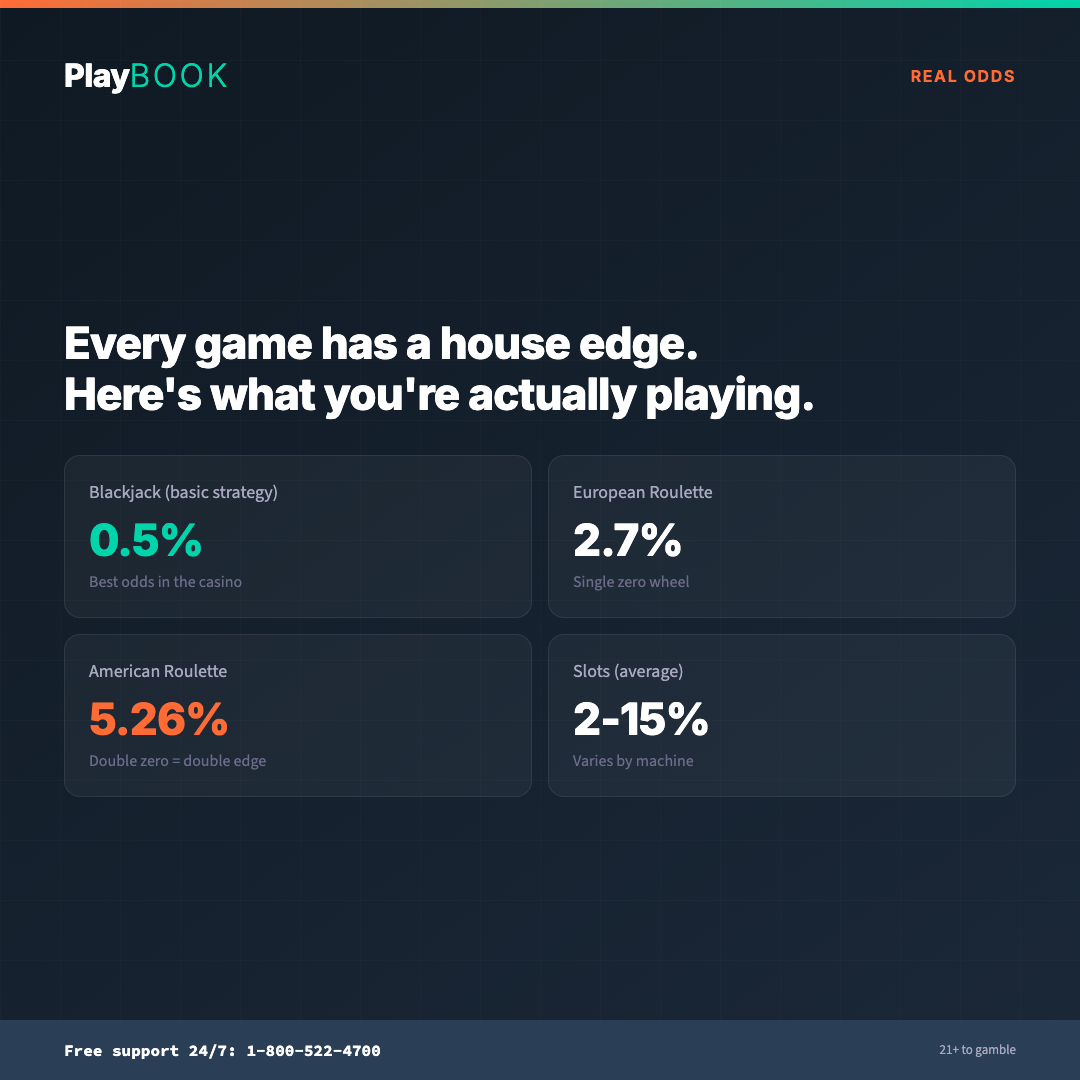
Blunt: “The house edge on American roulette is 5.26%. That’s one of the worst bets on the casino floor. Now you know.”
Dimension 5 — Comfort: how the brand handles sensitive topics. {{PROGRAM_NAME}} treats gambling as entertainment — discussed the way you’d discuss movies, sports, or dining out. The words “gambling,” “betting,” and “playing” appear freely. Content assumes the reader is an active player, and that’s fine. It normalizes without dramatizing. The tell: open and comfortable is not the same as flippant. Gambling is fun, and the content reflects that — but it never dismisses the reality that some players need support. It holds both truths without making either one weird.
Stigmatizing: “WARNING: Gambling can be addictive. If you or someone you know has a gambling problem, call the helpline immediately.”
Comfortable: “Every time you play, you’re making decisions. Some are better than others. This guide helps you see which is which. And if you ever want to talk, free support is available 24/7.”
Narrator Script
Narrator: [transition slide] Most player education sounds like it was written by a committee of lawyers told to “make it sound helpful.” The result: material nobody reads, nobody shares, and nobody acts on.
[pause 3s] {{PROGRAM_NAME}} sounds like somebody. Specifically, it sounds like a knowledgeable friend at the table with you — someone who knows the odds, has read the fine print, understands the math behind every game, but doesn’t lecture.
[show five-traits card] Five traits define this voice. Knowledgeable — it knows the math but explains it like something interesting at a bar. Confident — it doesn’t hedge. Generous — it shares because you should have the information. At the table — the perspective comes from inside the experience. And non-judgmental — it will tell you your system doesn’t work, but never makes you feel stupid for trying it.
[show what-the-voice-is-not card] The voice is a peer in conversation, not a teacher, not a doctor, not a parent, not a killjoy. It shares; you decide. It trusts you to be an adult. Gambling is fun, eyes open.
[show five-dimensions grid] Beyond those traits, five dimensions shape how {{PROGRAM_NAME}} sounds in practice. Voice — peer, not authority. Framing — opportunity, not warning. Humor — witty, not preachy, and here’s the guardrail that matters most: humor is on for Tier 1 education and completely off for Tier 2 support and crisis. Directness — blunt, not hedging. And Comfort — open and comfortable, not stigmatizing.
[pause 3s] Each dimension has a default setting and a guardrail. Learn all five and the content writes itself.
Section 2: Stigma-Free Language
Reading
Language shapes perception. The words on the screen decide whether someone stays or clicks away. When players run into clinical language — “problem gambler,” “warning signs,” “gambling addiction” — they assume the content isn’t for them. So they leave. This isn’t about political correctness. It’s about whether the message works at all.
The 10 essential swaps apply to all Tier 1 content — social posts, app copy, email, print, and in-venue signage:
| # | Don’t use | Use instead | Why |
|---|---|---|---|
| 1 | Problem gambler | Player | “Problem gambler” defines someone by a clinical label |
| 2 | Responsible gambling | Set a budget / Know the odds / Check your session | Generic label — name the specific behavior instead |
| 3 | Gambler | Player | “Player” is neutral and inclusive |
| 4 | Gambling addiction | Difficulty with gambling | “Addiction” is a clinical diagnosis — Tier 2 only |
| 5 | Self-exclude (in Tier 1) | Take a break / Pause your account | “Exclude” sounds punitive; “break” sounds voluntary |
| 6 | Intervention | Feature / Tool | “Intervention” is something done to you; “feature” is for you |
| 7 | Reality check | Session reminder | “Reality check” implies the player has lost touch with reality |
| 8 | You should | You can | “Should” is prescriptive; “can” offers a choice |
| 9 | WARNING | Heads up | “Warning” triggers avoidance; “Heads up” triggers attention |
| 10 | Odds are against you | The house edge is [specific number] | Same fact, different framing — informative vs. threatening |
Some stock phrases are worth retiring outright. Three of them show up everywhere, and all three fail for the same reason — they assume the reader has already labeled themselves:
- “Gamble responsibly.” Nobody has ever changed behavior because of this phrase. It carries zero actionable content. Replace it with the specific behavior: “Know the odds.” / “Set your budget.” / “Check your session.”
- “When the fun stops, stop.” It assumes players can self-diagnose in the moment. Many players experiencing difficulty still report having fun. Replace it with: “Set your limits before you play.”
- “If you or someone you know has a gambling problem, call X.” It only reaches people who already identify a problem, and excludes everyone else. Replace it with: “Free, confidential support — for any question about gambling.”
Why the swaps work: Stigma-free language isn’t about being “nice” — it’s about being effective. Clinical terms build a wall between the content and players who do not identify with clinical language. Person-first, action-specific, non-diagnostic language keeps the door open for everyone — including the player who does need help but won’t reach for a phrase that asks them to call themselves a “problem” first.
Operator integration point: These 10 swaps are the floor, not the ceiling. Your organization may have its own language policy, style guide, or code of conduct that extends or tightens them — and in some jurisdictions, specific wording is mandated by the regulator. Where yours differs, yours wins. Link your internal language standards here: Internal Policies
Narrator Script
Narrator: [transition slide] Language shapes perception. When players run into clinical terms like “problem gambler,” “warning signs,” or “gambling addiction,” they assume the material isn’t for them. So they leave.
[pause 3s] This isn’t about being polite — it’s about being effective. The gambling industry leans on language that stigmatizes players and puts the whole burden on the individual. {{PROGRAM_NAME}} swaps that out for stigma-free alternatives.
[show top-10 swaps table] Instead of “problem gambler,” say “player.” Instead of “responsible gambling,” name the specific action — “set a budget,” “know the odds,” “check your session.” Instead of “gambling addiction,” say “difficulty with gambling.” Instead of “self-exclude,” say “take a break” or “pause your account.”
[pause 5s] These aren’t cosmetic. Research shows stigmatizing language makes people less likely to seek help. When someone reads “If you have a gambling problem, call this number,” they have to label themselves before they can pick up the phone. That’s a barrier. “Free, confidential support — for any question about gambling” removes it.
[transition to exercise] Ten essential swaps cover all Tier 1 material — social posts, app copy, emails, print, in-venue signage. Now make the swaps yourself. Below is one session reminder the compliance committee wrote the old way — a warning, a clinical label, a “you should,” all at once. Rewrite it in the {{PROGRAM_NAME}} voice. A coach scores your version against the voice dimensions and the stigma-free swaps and tells you the one thing to fix next. Revise until it lands, then continue.
Now make the swaps yourself. The compliance committee wrote one session reminder that breaks almost every rule in this module at once — a warning, a clinical label, a “you should,” and a “reality check,” all in three sentences. Rewrite it in the {{PROGRAM_NAME}} voice. Diagnose what’s wrong first, then write your version; a coach scores it against the voice dimensions and the stigma-free swaps and tells you the one thing to fix next. Your wording won’t match anyone else’s — what matters is that the labels, the “shoulds,” and the warnings are gone, and the support stays.
Section 3: Tone Spectrum & Practice
Reading
{{PROGRAM_NAME}} has one voice and four tone registers. Choose the register by reading the situation: what the person is doing, how they are feeling, and what they need next.
The four registers cover every moment {{PROGRAM_NAME}} shows up in:
- Playful / Witty (Tier 1) — Myth-busting, quizzes, social cards, hook content. The personality shines here. Sarcasm, wordplay, and confident challenges earn attention instead of demanding it. Example: “Share this with the friend who thinks they have a ‘system.’”
- Confident / Informative (Tier 1) — Odds education, tool explanations, how-it-works, game guides. Clear, direct, no fluff. This is the educational workhorse. Example: “The house edge on blackjack is 0.5%. On slots, it’s 2-15%. Now you know.”
- Warm / Direct (Tier 2) — Check-ins, support access, limit notifications, at-risk touchpoints. This is where humor drops to zero. The voice stays generous and non-judgmental, but the tone is plain, clear, and immediate. No jokes. No cleverness. Just the information the player needs. Example: “Need to talk? Free, confidential, 24/7.”
- Celebratory (Tier 1) — Quiz results, limit-set confirmations, achievement moments. Restrained enthusiasm. Example: “You scored 8/10. Sharper than most. Challenge a friend?” — not “Amazing! You’re a champion!”
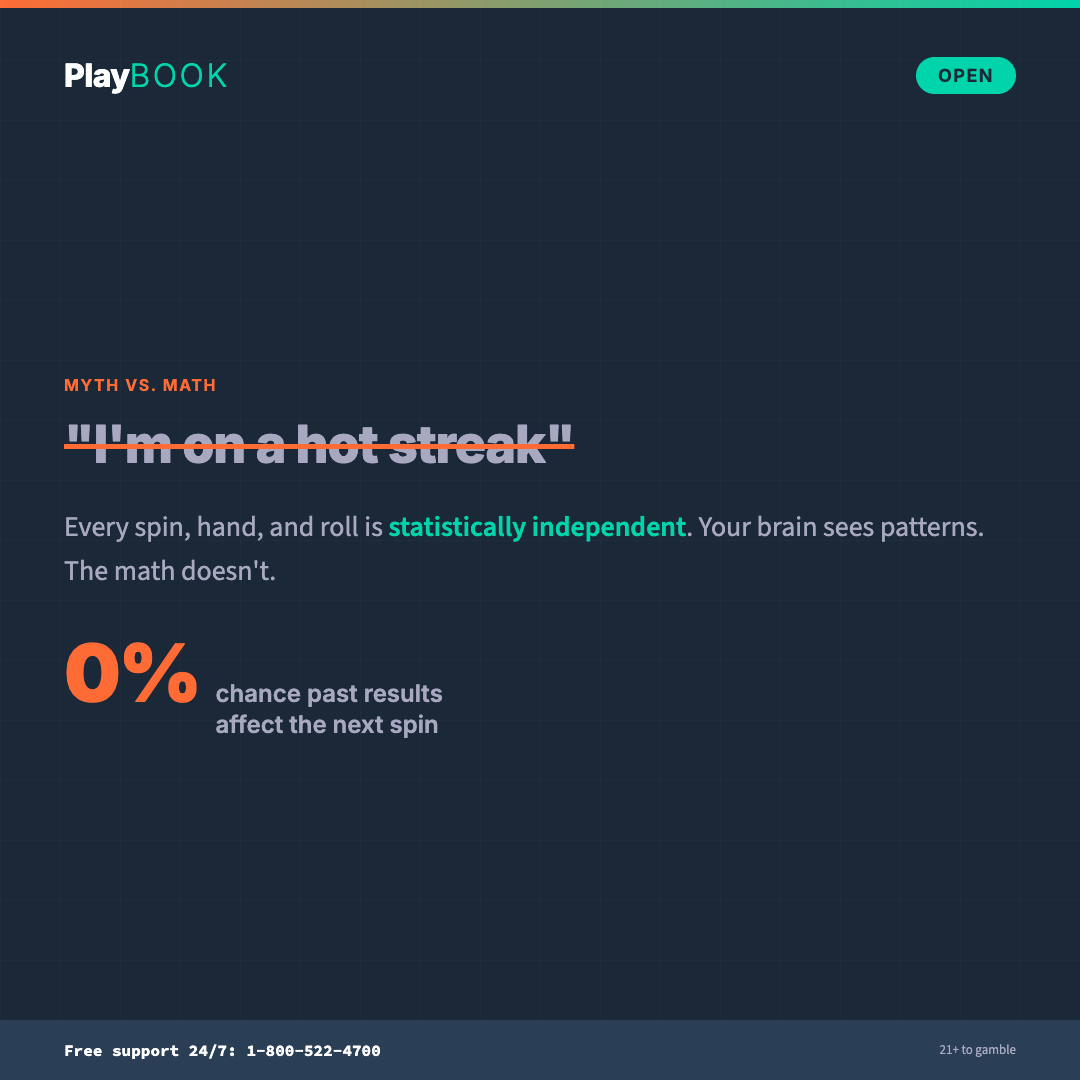
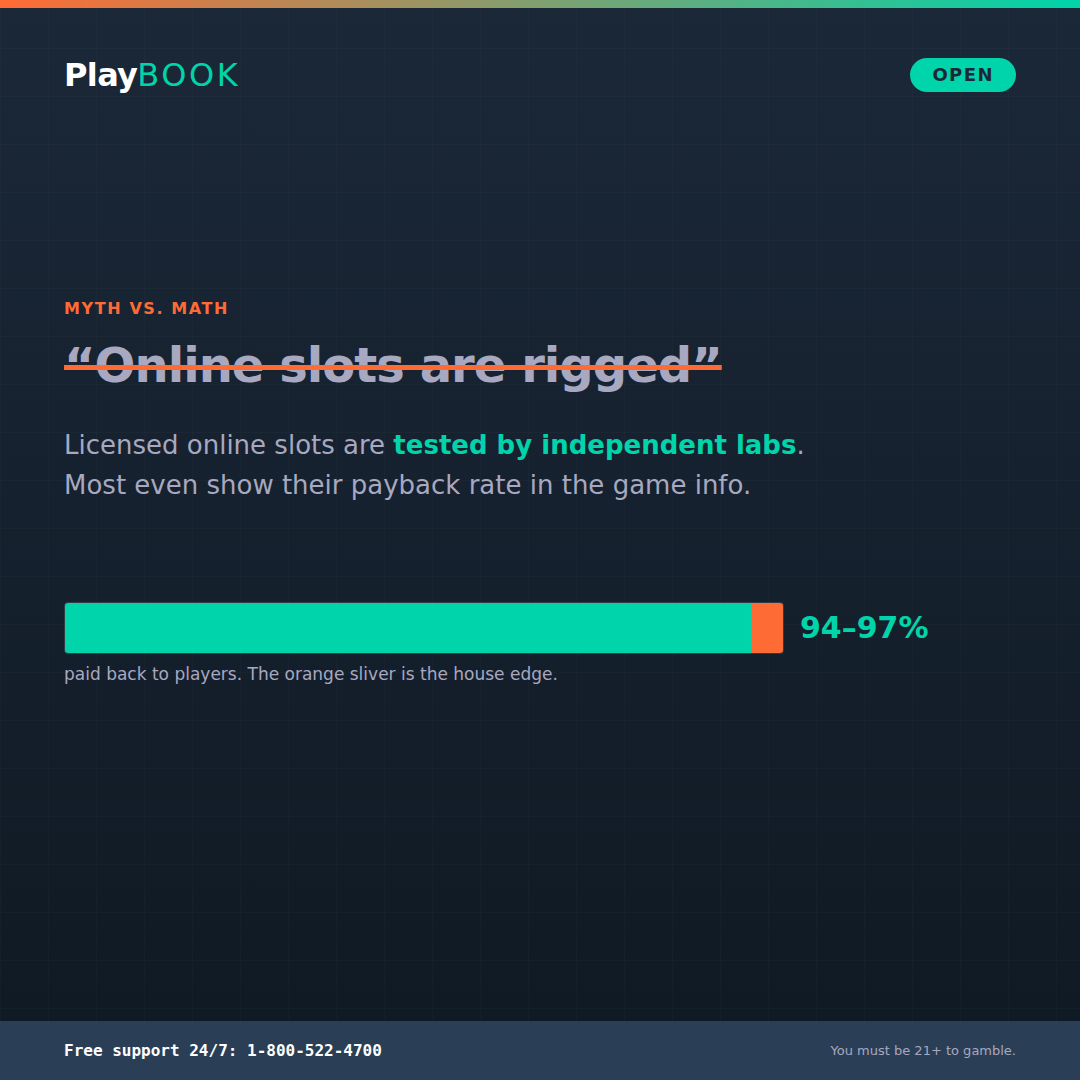
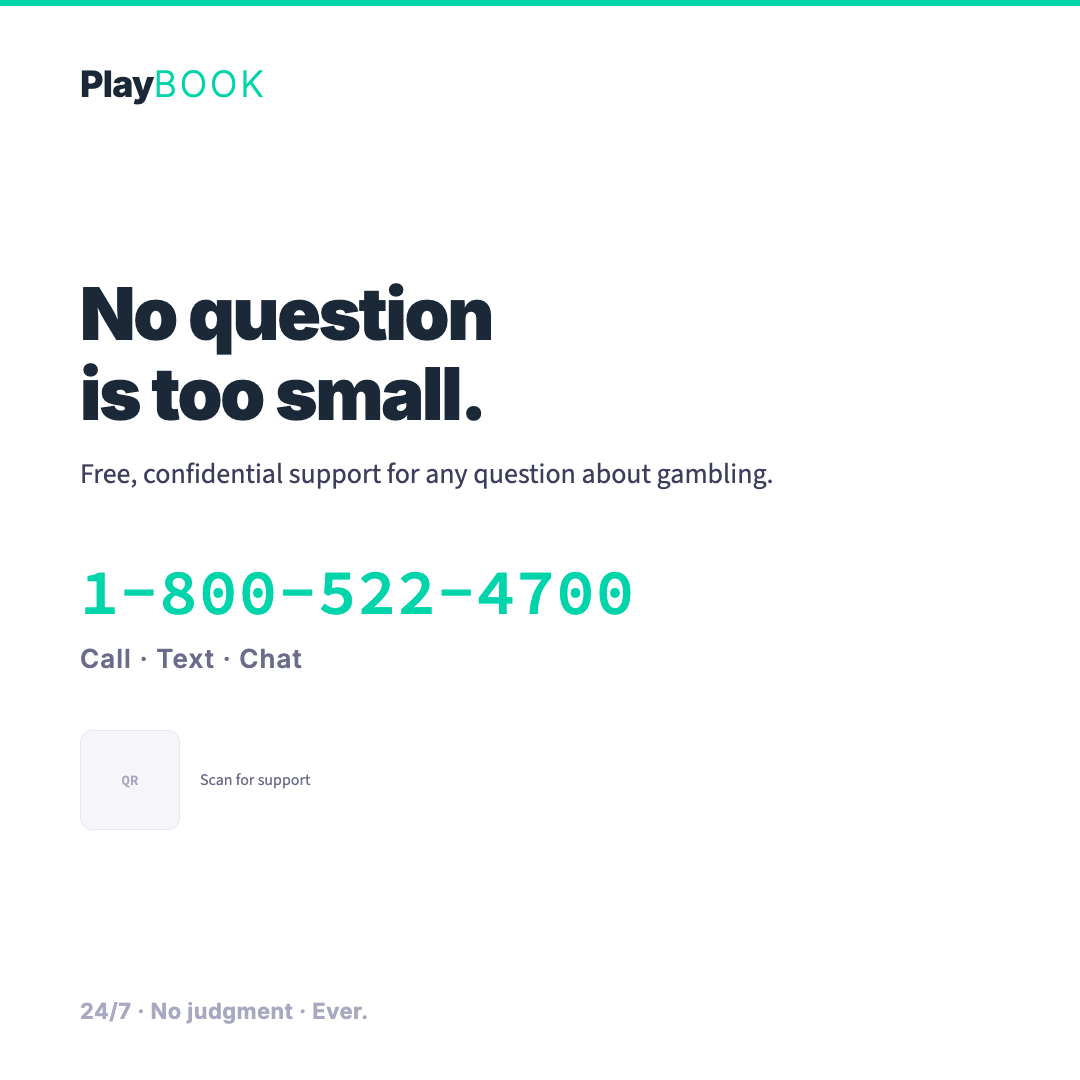
Put the registers side by side and you can see the shift. The witty myth card above — struck-through headline, a cheeky 0% stat — is Playful / Witty, Tier 1, humor on. The support card below is Warm / Direct, Tier 2, humor at zero. Same person, same generosity, same respect for the reader. Only the register moved.
Matching registers to context is the skill, and it isn’t a creative choice. The register follows the situation:
| Context | Register | Why |
|---|---|---|
| Myth-busting article / social post | Playful / Witty | Competing for attention — earn it with insight |
| Odds explainer / onboarding / tool description | Confident / Informative | Math, mechanics, and setup — clarity matters |
| Session reminder | Warm / Direct | Practical check-in, gentle nudge |
| Self-exclusion page | Warm / Direct (serious) | Zero humor, maximum clarity |
| Quiz results / achievement moments | Celebratory | “Here’s what you know” energy |
The one rule for Warm / Direct: when the register is Warm / Direct, humor drops to zero. This is Tier 2 territory — support access, crisis moments, take-a-break flows. The voice stays the same (generous, honest, non-judgmental) but the tone goes plain, clear, and immediate. No jokes. No cleverness. Just the information the player needs.
Narrator Script
Narrator: [transition slide] {{PROGRAM_NAME}} has one voice but four tone registers. Same person, different conversations. Knowing when to use each one is what separates competent brand writing from great brand writing.
[show four-registers grid] The four registers. Playful and Witty — your myth-busting, quiz, and social register. The personality shines here. Sarcasm, wordplay, confident challenges that earn attention instead of demanding it. Tier 1 only. Confident and Informative — the educational workhorse. Odds explanations, game guides, how-to material. Clear, direct, no fluff.
Warm and Direct — Tier 2 territory. Support pages, session reminders, check-in moments. This is where humor drops to zero. The voice stays generous and non-judgmental, but the tone is plain, clear, and immediate. No jokes, no cleverness, just the information the player needs. It’s one of the most important guardrails in the system: humor on for education, off for support.
And Celebratory — for quiz results, milestones, positive moments. Restrained enthusiasm. “You scored nine out of ten. Sharper than most. Challenge a friend?” Not “Amazing! You’re a champion!”
[pause 3s] Matching the register to the moment isn’t a creative call — it follows the context. Myth-busting gets Playful. Odds education gets Confident. A self-exclusion page gets Warm and Direct. Quiz results get Celebratory. The voice never changes; the register always matches the moment.
[pause 2s] Your turn to tune the dial. I’ll give you five real messages — decide which register each one calls for. Match them, then continue.
Section 4: Cultural Adaptation
Reading
The {{PROGRAM_NAME}} voice principles are universal. The expression adapts to the market. The character never changes; the dialect does.
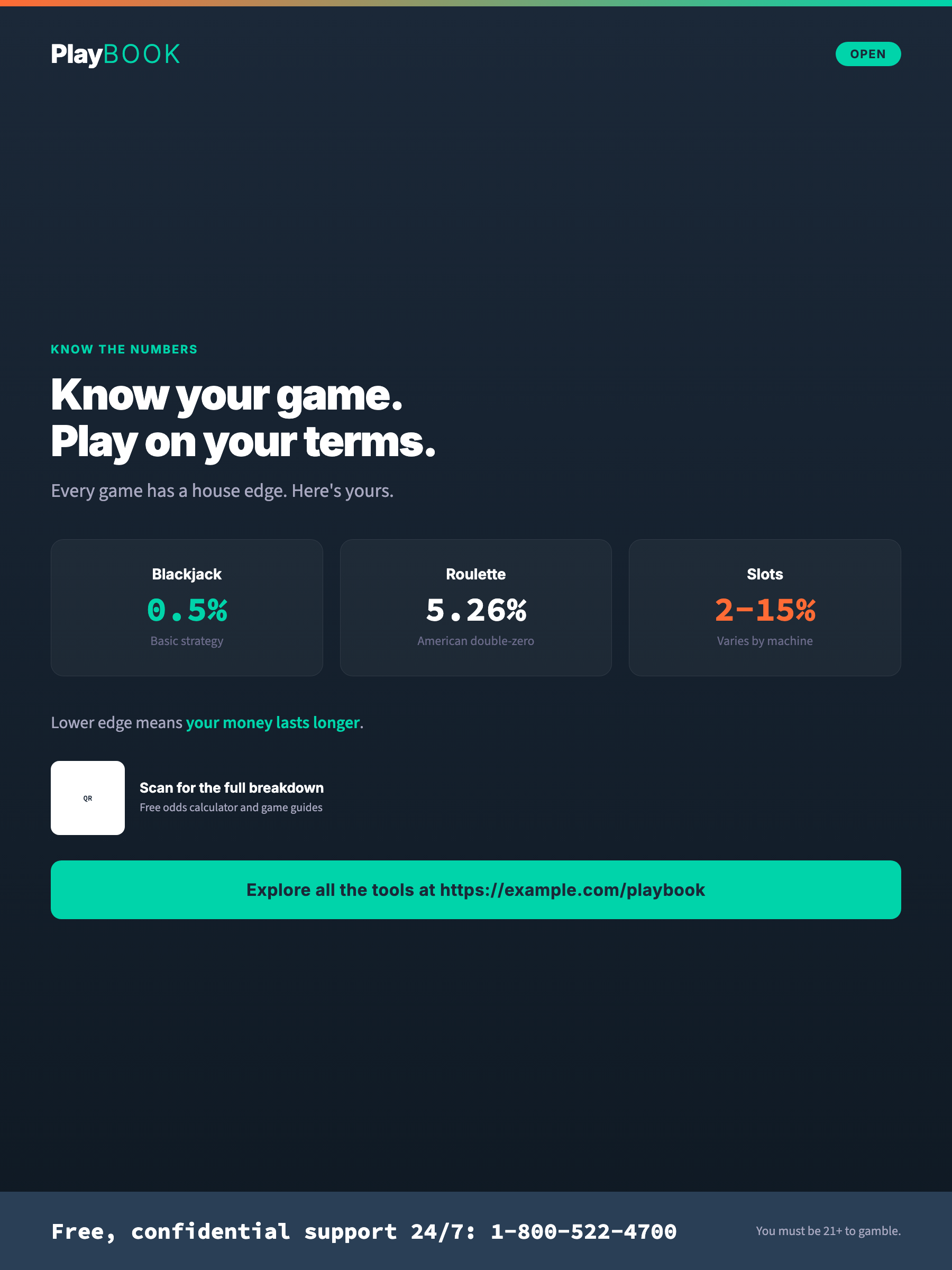
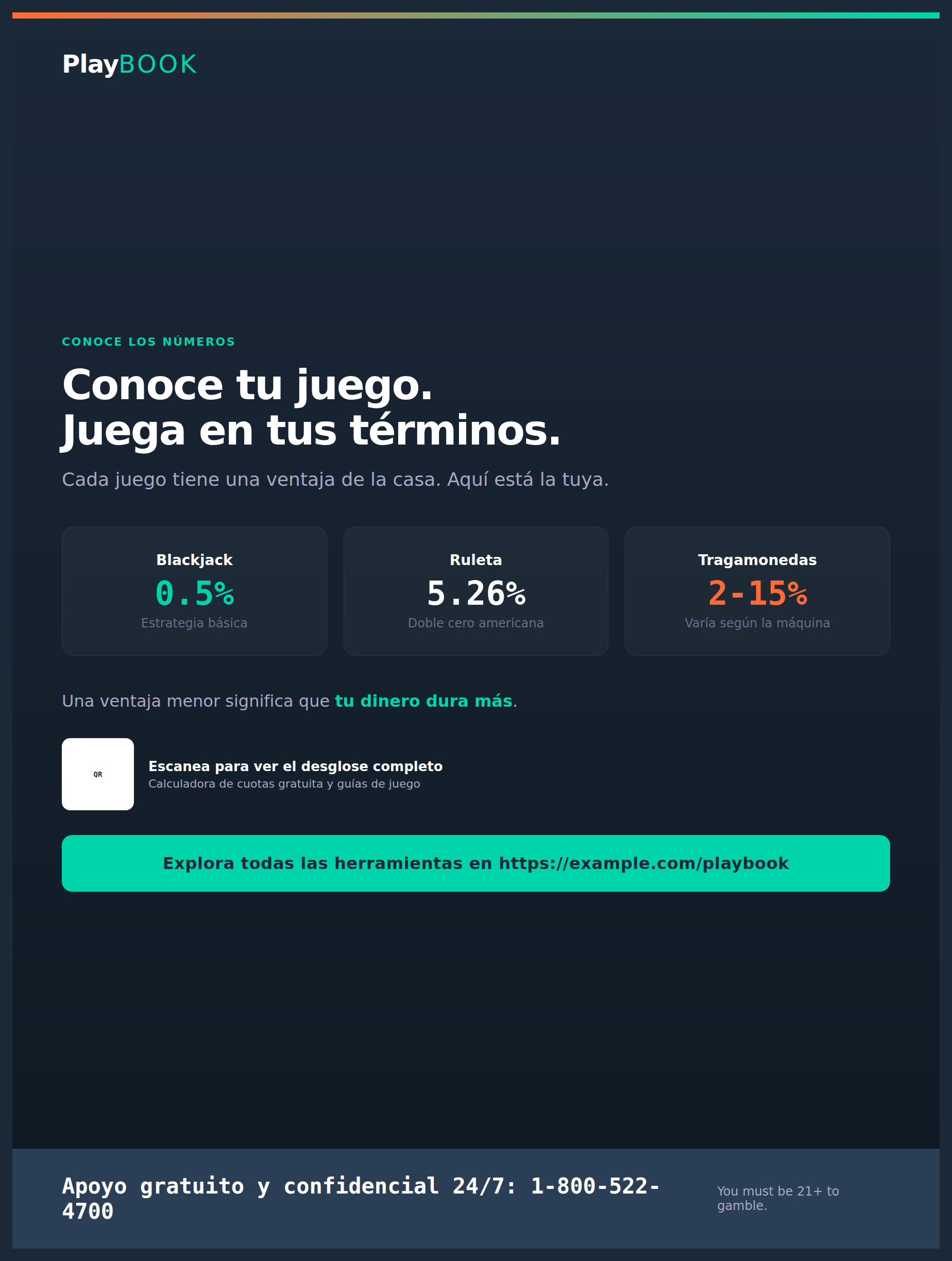
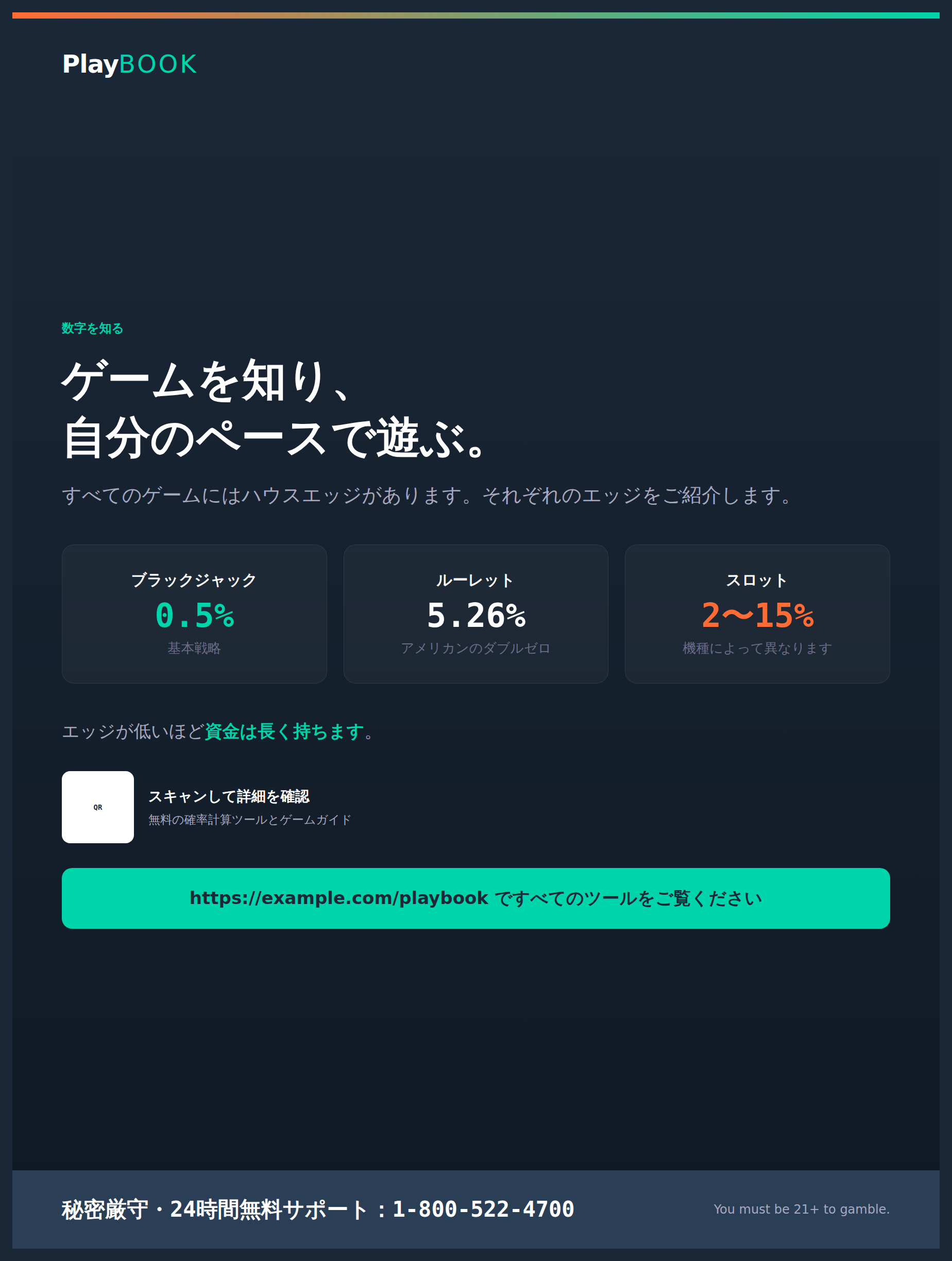
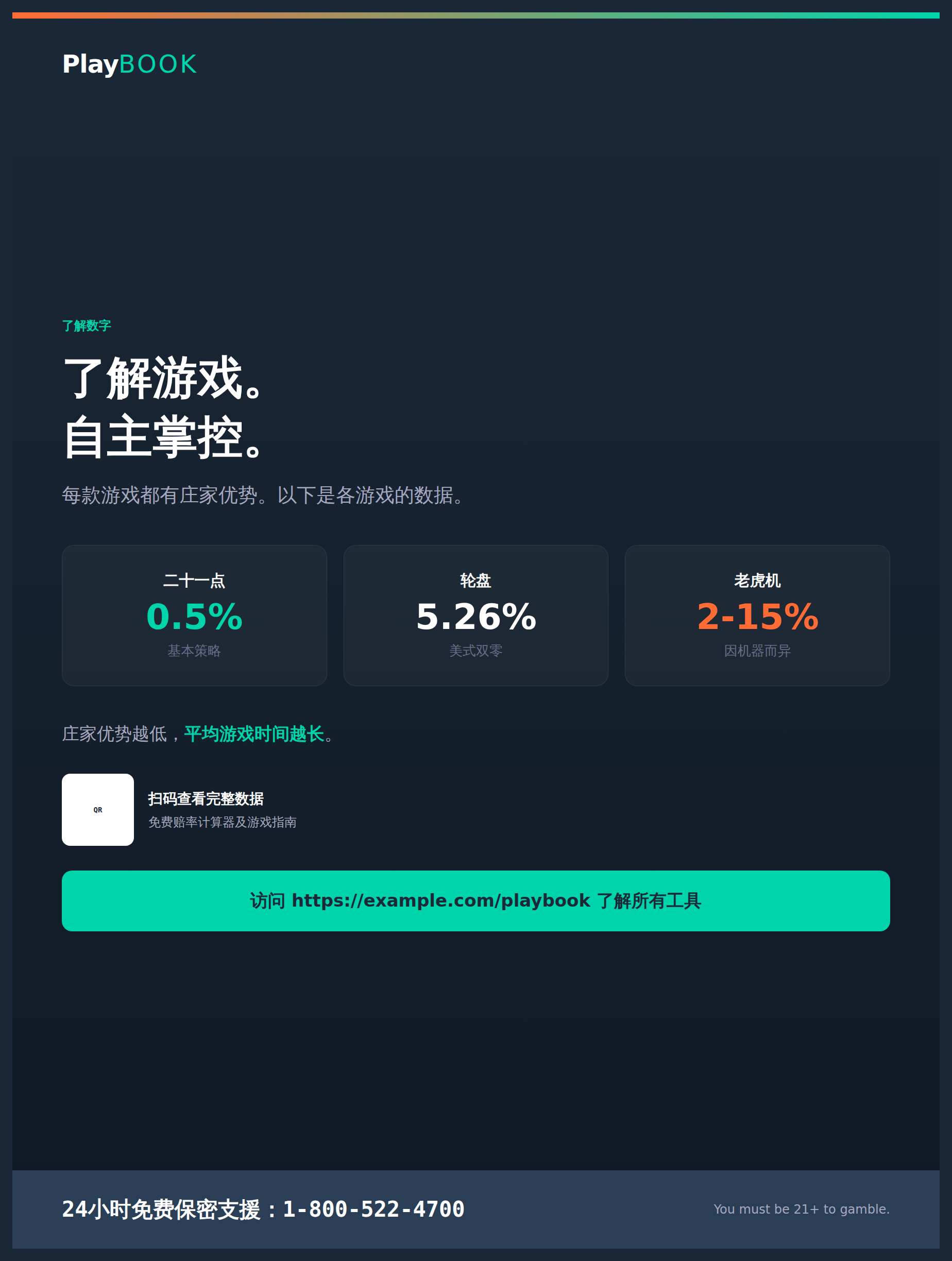
The same Know Your Game poster across four markets. The system never moves — navy ground, teal and orange accents, the layout, the house-edge stat block, the PlayBOOK wordmark. Only the language does. That's the rule made literal: the character holds, the dialect changes.
What never changes — the Brand DNA. Regardless of market, audience, or language, five things stay fixed:
- Generous with information — Shares because you should have it, not to show off.
- Respectful of intelligence — Never talks down, in any language.
- Honest about how things work — No spin, no scare tactics.
- Treats gambling as entertainment — Fun is the point, everywhere.
- Corrects without judgment — Will tell you your “system” doesn’t work, but never makes you feel stupid for trying it.
The emotional test: after adapting content for a market, read it aloud. If it sounds like it was written by someone who doesn’t respect the reader — or by someone who doesn’t like gambling — the adaptation has drifted from Brand DNA. Rewrite it.
What adapts — the Brand Expression. How those traits get expressed varies by market, and two dimensions matter most: the humor register and the directness level.
The humor register flexes the most. Humor is core to {{PROGRAM_NAME}} — it’s what separates the brand from compliance content. But how loud that humor runs depends on the market. Take one idea — no betting system beats the house edge — and listen to it shift register. These are the real variants from the brand book’s Cultural Adaptation guide:
| Register | Markets | Style | The same point, re-voiced |
|---|---|---|---|
| Bold | Australia, US | Irreverent sarcasm, direct challenges. The humor hits hard and fast. | “Think you’ve got a system that beats the house? Cool. The house has a system too. It’s called math.” |
| Understated | UK | Dry wit, knowing understatement. The humor is there if you’re looking for it. | “The house, it’s fair to say, has done the maths. Rather thoroughly.” |
| Minimal | Asia, Nordic | Clean and restrained — written by someone with a sense of humor who chose to hold it. | “No betting system changes the mathematical expectation of a game. The house edge is built into every game’s structure.” |
Same fact, same respect for the reader — only the volume of the humor changes. None of them reads like a compliance form.
The directness level controls how hard you can deliver a hard truth. Take one number — American roulette’s 5.26% house edge — and watch the delivery change:
| Level | Markets | Style | The same number, delivered |
|---|---|---|---|
| Direct | Australia, Nordic | Plain facts, no softening. Conclusion first, evidence second. | “The house edge on American roulette is 5.26%. That’s one of the worst bets on the casino floor.” |
| Diplomatic | UK, parts of Asia | Same fact, wrapped in comparison so it lands gently. | “American roulette carries a house edge of 5.26% — higher than most table games. That difference adds up, especially over a longer session.” |
| Contextual | Japan, communal markets | The conclusion is never stated; the reader arrives at it from the comparison. | “Compare the major table games side by side: blackjack gives up about 0.5%, roulette between 2.7% and 5.26%. Over an evening, those differences shape the experience more than most players realize.” |
All three are generous, honest, and non-judgmental. The information is identical — only the delivery changes to fit how the audience expects to be spoken to.
Adapting for your own market comes down to four questions:
- How direct can we be? Can we say “This bet is terrible,” or should we show the comparison and let the reader draw the conclusion?
- What’s the humor ceiling? Can we be cheeky? Dry? Or should humor be almost invisible?
- How is gambling culturally framed? As entertainment? A social activity? Something private? The frame decides which voice traits to lean on.
- What pronouns and perspective feel natural? “You” is universal, but some markets prefer “we” (communal) or third-person framing for sensitive topics.
Narrator Script
Narrator: [transition slide] The {{PROGRAM_NAME}} voice principles are universal. The expression adapts to the market.
[show localized poster] Here’s that rule made literal. The same Know Your Game poster, here in Japanese — and the system never moves. Navy ground, teal and orange, the layout, the wordmark, the house-edge stats all hold. Only the language changes. Translate the words; never the character.
[show Brand DNA card] Five things never change, whatever the audience, language, or geography — the Brand DNA: generous with information, respectful of intelligence, honest about how things work, treats gambling as entertainment, and corrects without judgment.
[show humor and directness spectra] What adapts is how those traits get expressed, and two dimensions matter most: humor register and directness level. Humor can be bold — the irreverent sarcasm common in Australia and the US. It can be understated — dry wit for the UK. Or minimal — warm and clean for Asian and Nordic markets. All three are valid, as long as the material doesn’t read like a compliance form.
Directness follows the same idea. Take one number — American roulette’s house edge, 5.26%. Direct markets like Australia and the Nordics get it plain: that’s one of the worst bets on the floor. Diplomatic markets like the UK get the same number wrapped in comparison — higher than most table games, and it adds up over a session. Contextual markets like Japan never state the conclusion: compare the games side by side, and the difference speaks for itself.
[pause 3s] Same information, different cultural wrapping. The character holds; only the dialect changes.
Module Test
Narrator: [transition slide] Time to test what you’ve learned. Five questions covering the {{PROGRAM_NAME}} voice, stigma-free language, tone registers, and cultural adaptation. You need 80 percent to mark this module complete. Take your time and think about the principle behind each answer.
Question 1
Assesses: Learning objective 1
Stem: Which of these best describes the {{PROGRAM_NAME}} voice?
| Option | Text |
|---|---|
| A | An authority figure explaining rules players must follow |
| B | Someone who knows the game, shares the real story, and respects you enough to give it straight |
| C | A clinical expert presenting research findings to patients |
| D | A friend who avoids difficult topics to keep things light |
Correct: B
Explanation: The {{PROGRAM_NAME}} voice is knowledgeable without being academic, confident without being arrogant, and generous with information. It’s at the table with you, not looking down from a lectern.
Source: Brand Personality
Question 2
Assesses: Learning objective 1
Stem: What’s the difference between “Witty / Not Preachy”?
| Option | Text |
|---|---|
| A | Witty content uses jokes; preachy content uses facts |
| B | Witty content earns attention through insight and humor; preachy content demands attention through moral authority |
| C | Witty content is for social media only; preachy content is for serious topics |
| D | There is no meaningful difference — both are forms of persuasion |
Correct: B
Explanation: Wit respects the reader — “I’m going to make this interesting for you.” Preachiness disrespects the reader — “I know better than you, and you need to listen.” {{PROGRAM_NAME}} aims humor at myths and misconceptions, never at players.
Source: Brand Personality
Question 3
Assesses: Learning objective 2
Stem: Which of these follows {{PROGRAM_NAME}}‘s stigma-free language guidelines?
| Option | Text |
|---|---|
| A | ”If you have a gambling problem, call our helpline” |
| B | ”Free, confidential support is available 24/7 — for any question about gambling” |
| C | ”Gamble responsibly — set limits to protect yourself” |
| D | ”Warning: gambling can lead to addiction” |
Correct: B
Explanation: Option B frames the helpline as accessible to everyone (“for any question”), doesn’t require the player to self-identify as having a “problem,” and uses inviting language (“free, confidential, available”) rather than warning language.
Source: Stigma-Free Language Guide
Question 4
Assesses: Learning objective 3
Stem: A player just completed the Game IQ quiz and scored 9/10. What tone register should the result screen use?
| Option | Text |
|---|---|
| A | Warm / Direct |
| B | Confident / Informative |
| C | Celebratory (restrained) |
| D | Playful / Witty |
Correct: C
Explanation: Achievement moments use the Celebratory register — but restrained. “You scored 9/10. You’re sharper than most. Challenge a friend?” This acknowledges the accomplishment without going over the top.
Source: Voice and Tone
Question 5
Assesses: Learning objective 4
Stem: When adapting the {{PROGRAM_NAME}} voice for a market where direct humor feels confrontational, what changes and what stays the same?
| Option | Text |
|---|---|
| A | Everything changes — each market needs its own brand voice |
| B | The humor level stays the same but the topics change |
| C | The intent stays the same (generous, honest, non-judgmental) but the expression adapts (dry wit instead of cheeky sarcasm) |
| D | You should remove humor entirely for sensitive markets |
Correct: C
Explanation: Brand DNA is universal: generosity, honesty, respect for intelligence. Brand expression adapts. “This bet is terrible” works in direct markets. “Comparing the major bets side by side, you’ll notice some give up significantly more” achieves the same intent in markets where directness feels confrontational.
Source: Brand Personality
Key Takeaways
- The {{PROGRAM_NAME}} voice is one person: knowledgeable, confident, generous, at the table with you. It corrects without judgment and treats gambling as entertainment.
- Five dimensions define how it sounds: Voice (peer, not authority), Framing (opportunity, not warning), Humor (witty, not preachy), Directness (blunt, not hedging), and Comfort (open, not stigmatizing). Get all five right and the content writes itself.
- Stigma-free language isn’t about being “nice” — it’s about being effective. Clinical terms wall the content off from players who do not identify with clinical language. The 10 essential swaps apply to all Tier 1 content.
- One voice, four registers. Playful/Witty earns attention. Confident/Informative delivers clarity. Warm/Direct provides support. Celebratory rewards achievement. The voice (who {{PROGRAM_NAME}} is) never changes. The tone (how it speaks right now) always matches the moment — and the moment is set by context, not topic.
- The voice is universal. The expression adapts. Humor can be bold, understated, or minimal — all valid, as long as the content doesn’t read like a compliance form. Directness can be blunt, diplomatic, or contextual — all honest. Adapt the dialect, never the character.
Source basis
You don’t need to read these, but they’re the published research and brand-system sources behind the module’s rules — in case a colleague asks.
- Blaszczynski, A., Ladouceur, R., & Shaffer, H.J. (2004). A science-based framework for responsible gambling: The Reno Model. Journal of Gambling Studies, 20(3), 301–313. Why it’s here: the informed-choice foundation behind the peer-not-authority voice and the “shares; you decide” framing — players as autonomous adults, not patients.
- Miller, H.E. & Thomas, S.L. (2017). The problem with ‘responsible gambling’: impact of government and industry discourses on feelings of felt and enacted stigma. International Gambling Studies, 17(2), 290–307. Why it’s here: the evidence that clinical, “responsible gambling” framing produces stigma — the case for the 10 swaps and the phrases-to-retire list in Section 2.
- Hing, N., Russell, A.M.T., & Gainsbury, S.M. (2016). Unpacking the public stigma of problem gambling: the process of stigma creation and predictors of social distancing. Journal of Behavioral Addictions, 5(3), 448–456. Why it’s here: documents how labels like “problem gambler” drive avoidance rather than help-seeking — why person-first language keeps the door open.
References
| Resource | What to use it for |
|---|---|
| Brand Personality | The voice, the five traits, “at the table” framing, the five dimensions |
| Voice and Tone | Voice principles, the four tone registers, sample rewrites |
| Stigma-Free Language Guide | The full term-swap list, context-dependent terms, testing checklist |
| Cultural Adaptation Guide | Brand DNA vs Brand Expression, humor and directness spectrums by market |
Tone Matcher
What tone register is this?
Each register serves a purpose. The voice stays the same — confident, generous, never preachy. The tone shifts to match the moment.