Customer Journey
Useful communication meets people at the right moment. This module follows five journey stages, from Awareness to Support Seeking, and shows how education, tool messages, and support fit together. You will plan content for each stage while keeping support easy to find.
Operator note: Replace
{{PROGRAM_NAME}}with your program name throughout. The five journey stages, the escalation sequence, the message hierarchy, and the myth-busting library are part of the brand system and should not be modified. What you do customize is the campaign calendar — which verticals you run, when, and in what order. Narrator scripts should be recorded in the Playbook Tier 1 voice unless a section is marked Tier 2.
Program: Brand Foundations | Duration: ~25 min | Prerequisites: Player Segmentation
Quick-scan index
| Section | What it covers | Time |
|---|---|---|
| Learning objectives | What you’ll know after this module | — |
| Section 1: The Player Journey | Five-stage content escalation model | ~10 min |
| Section 2: Content & Campaigns | Message hierarchy, campaigns, myth-busting library | ~10 min |
| Module test | 5 graded questions, 80% to pass | ~3 min |
| Key takeaways | Summary | — |
Learning objectives
After completing this module, you will be able to:
- Map the five-stage player content journey from Awareness to Support Seeking — and spot the most common stage we skip
- Sequence content escalation so tools appear at the stage they’re needed, not at signup
- Plan a 90-day campaign using the myth-busting library and the cadence framework
Why this matters: You’re the one planning the calendar. A great myth-busting card does nothing if it lands on a player who signed up yesterday and just wants to know how blackjack works — and a deposit-limit prompt on Day 1 reads as a warning, not a feature. Sequencing is the skill. This module gives you the map so you put the right content in front of the right player at the right moment.
Think about this: Think back to the last app or service you signed up for that immediately buried you in settings, warnings, and “manage your account” prompts before you’d even used it once. Did it feel like the product was helping you — or bracing for you to be a problem? Hold that feeling. It’s exactly what generic RG does on Day 1, and exactly what content escalation is built to avoid.
Section 1: The Player Journey
Reading
{{PROGRAM_NAME}}‘s content follows a content escalation model. It starts with what every player wants — how to play — and builds toward what long-term regulars need. Most players never reach the later stages, and that’s by design.
The 5 stages:
| Stage | What’s happening | {{PROGRAM_NAME}}‘s role |
|---|---|---|
| 1. Awareness | Player hasn’t signed up yet. Encountering the brand through ads, social, search. | {{PROGRAM_NAME}} appears as a companion brand alongside the product. Content teaches how the game works — odds, rules, what the numbers mean. Makes gambling less intimidating. Not a safety section; a product feature. |
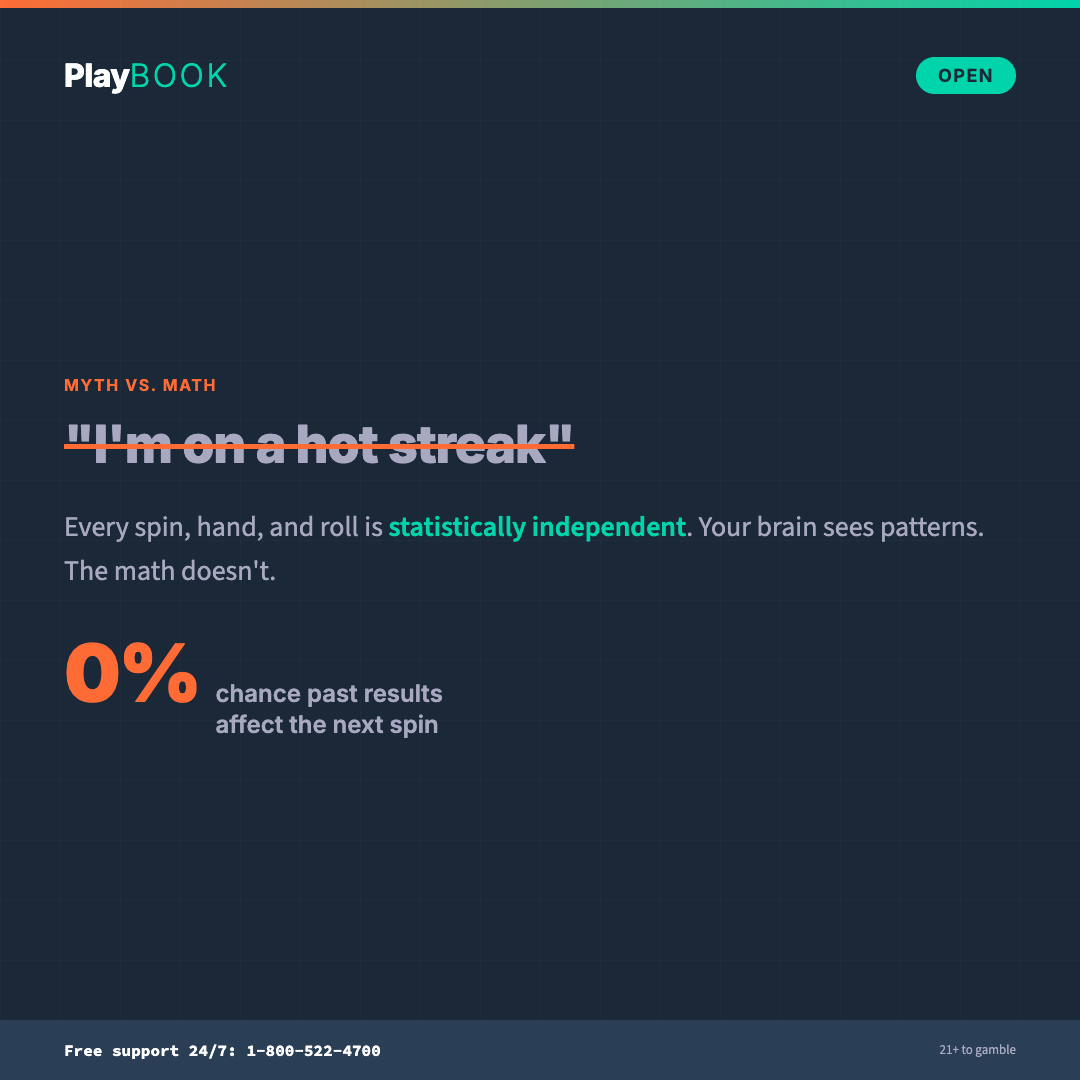
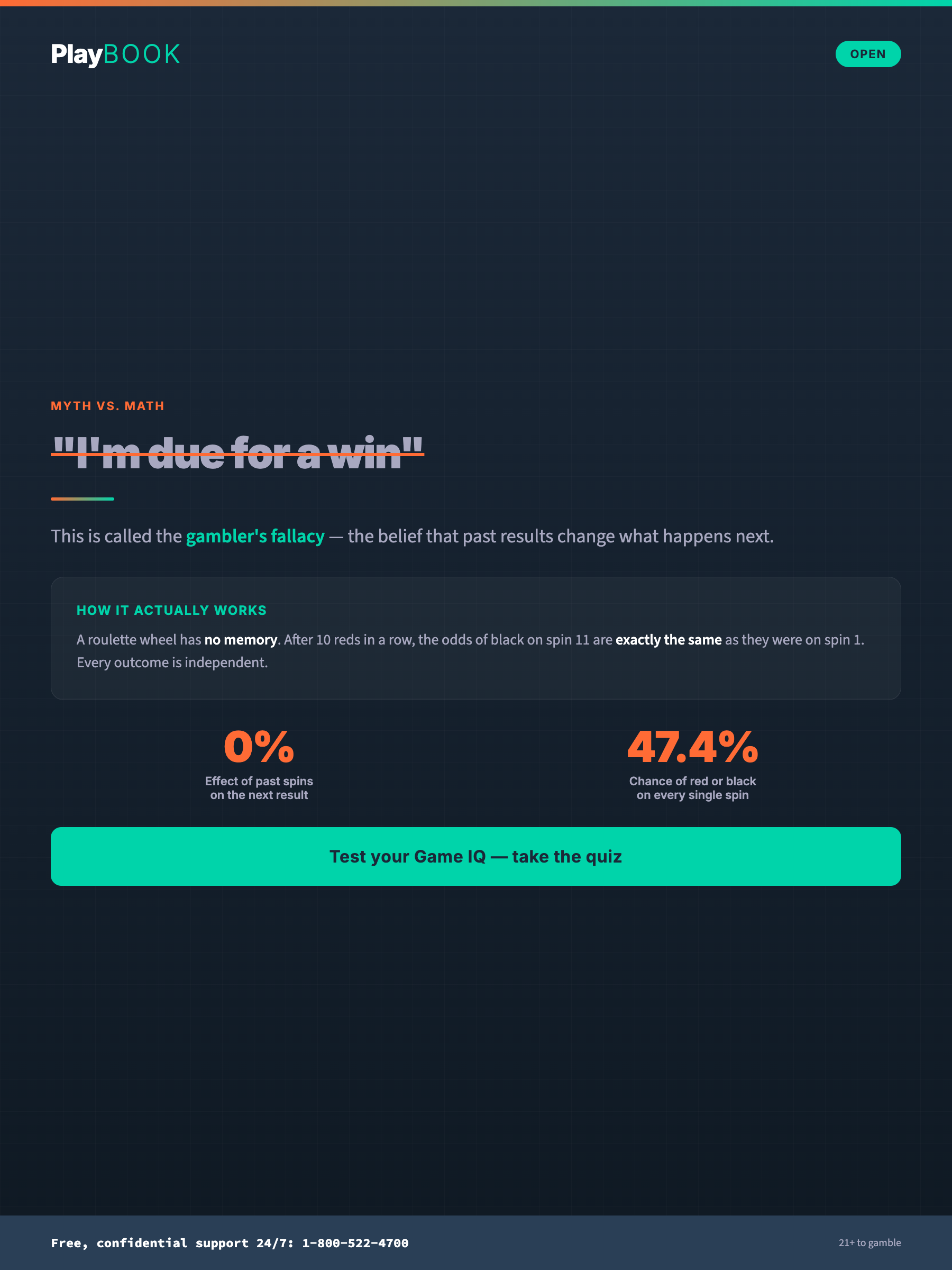
| 2. New Player | Signed up, first sessions. Learning the basics, placing first bets or spins. | Once they know the basic rules, introduce myth-busting content — cognitive distortions like “I’m due for a win” or “this machine is hot.” Builds gambling resilience indirectly through education, not warnings. |
| 3. Active Player | Settled in. Regular sessions, familiar with the product. | Entertainment literacy. Finer points, strategy (where applicable), product-specific knowledge. The player is engaged enough to want to learn more — quizzes, game guides, content hub articles. |
| 4. Regular | Long-term player. Predictable pattern of play over weeks or months. | Now introduce self-management tools — activity tracking, budgeting, limit-setting. The relationship is established, so these feel like a natural upgrade, not a warning sign. |
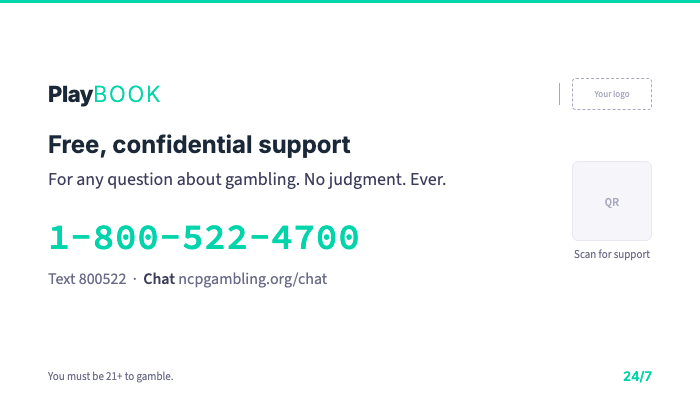
| 5. Support Seeking | Player or someone close to them is looking for help. | Tier 2 content. Direct path to support resources — no friction, no forms, no questions asked. |
This is not a funnel. Most players engage with Stages 1-2 only. Some reach Stage 3. A minority become Regulars. Support Seeking can happen at any point. The framework tells you what content to have ready — not that every player will need it.
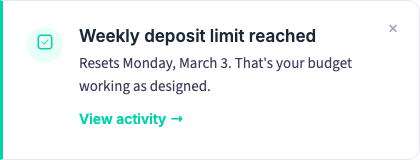
The escalation logic, in one move. Notice what {{PROGRAM_NAME}} does not do: it doesn’t push deposit limits on Day 1 or surface self-exclusion tools during onboarding. That’s the generic RG approach, and it fails because players don’t have a relationship with the brand yet. Instead, {{PROGRAM_NAME}} earns the relationship in stages. Early on (Stages 1-2) it leads with education: “Here’s how the game works. Here’s what most people get wrong.” The player sees {{PROGRAM_NAME}} as useful — a companion that helps them play smarter, with no compliance language and no tool-pushing. Later (Stages 3-4), and only after weeks of engagement once the player trusts the brand, self-management tools appear. They arrive as features, not interventions: “Your activity dashboard is ready” instead of “You should set a limit.”
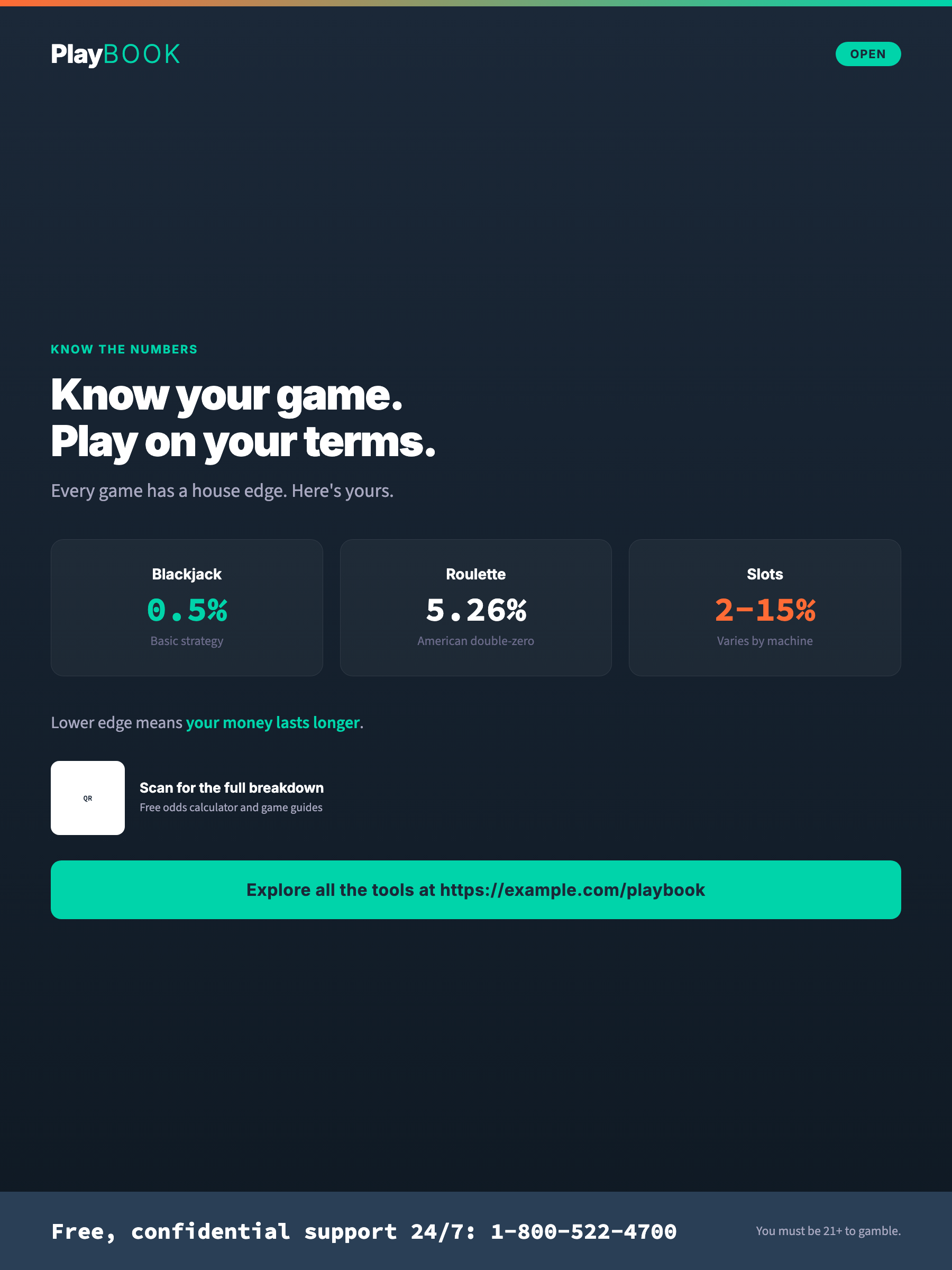
Three moments where the strategy shifts. As a player moves through the journey, the content does too. From New to Active, game education gives way to myth-busting and entertainment literacy — the player has the basics, so now you build resilience through cognitive-distortion content. From Active to Regular, education gives way to tools — activity dashboards, budgeting features, limit-setting, all introduced as upgrades, not interventions, because the relationship has earned this moment. And at any stage to Support, the content switches to Tier 2: a direct path to support with no friction and no marketing, available always, one tap away.
The through-line: {{PROGRAM_NAME}}‘s content escalation starts with what every player wants — how to play — and builds toward what regulars need — self-management tools. Most players only ever see the educational content, and that’s fine. The early stages build resilience on their own. Tools arrive later, when they’ve been earned.
Narrator Script
Narrator: [transition slide] {{PROGRAM_NAME}} follows what we call a content escalation model. It starts with what every player actually wants, which is learning how to play, and builds toward what long-term regulars eventually need. Most players never reach the later stages, and that is by design.
[show five-stages timeline] There are five stages. At Awareness, the player has not signed up yet. {{PROGRAM_NAME}} appears as a companion brand alongside the product, teaching how the game works — odds, rules, what the numbers mean. It makes gambling less intimidating. This is not a safety section. It is a product feature.
At the New Player stage, once they know the basic rules, you introduce myth-busting. Cognitive distortions like “I am due for a win” or “this machine is hot.” This builds resilience indirectly, through education rather than warnings.
At the Active Player stage, the player is settled in. This is where entertainment literacy lives — finer points, strategy where it applies, product-specific knowledge, delivered through quizzes, game guides, and articles. The player is engaged enough to want more.
At the Regular stage, and only at this stage, you introduce self-management tools. Activity tracking, budgeting, limit-setting. The relationship is established, so these feel like a natural upgrade, not a warning sign.
And Support Seeking can happen at any point. This is Tier 2: a direct path to support resources, with no friction, no forms, and no questions asked.
[pause 5s] Remember, this is not a funnel. Most players engage with the first two stages only. Some reach stage three. A minority become Regulars. The framework tells you what to have ready, not that every player will move through all of it.
[show what-not-to-do card] Now notice what {{PROGRAM_NAME}} does not do. It does not push deposit limits on day one. It does not surface self-exclusion tools during onboarding. That is the generic approach, and it fails because players do not have a relationship with the brand yet. {{PROGRAM_NAME}} earns that relationship in stages — education first, then tools.
[transition to exercise] A few player scenarios are waiting below. For each one, decide which journey stage the player is in — and what content belongs there. Work through them, then continue.
Exercise: Journey Stage Check
Type: journey-stage-check
Instructions: For each scenario, pick which journey stage best matches the player’s current relationship to the product. Think about what {{PROGRAM_NAME}}‘s content escalation model says about each stage.
| Item | Correct | Distractor A | Distractor B | Feedback (correct) | Feedback (incorrect) |
|---|---|---|---|---|---|
| A player signed up two days ago. They’ve completed one deposit, played three short blackjack sessions, and just opened the “How does blackjack work?” help article. | Stage 2: New Player — myth-busting content about the gambler’s fallacy | Stage 4: Regular — activity dashboards and deposit limit tools | Stage 3: Active Player — advanced strategy content and quizzes | Correct. This player just signed up and has a few sessions in. They know the basic rules, so it’s time to introduce myth-busting — cognitive distortions like “I’m due for a win.” Stage 2 builds resilience through education, not warnings. | Showing tools this early (Stage 4) violates the content escalation model. At two days in with a help article just opened, the player is still learning the basics — Stage 2 myth-busting is the right next step, not advanced strategy (Stage 3). |
| A player has been active for four months. They log in three to four times per week, play casino and sportsbook, and recently completed a Game IQ quiz. They’ve never used any self-management tools. | Stage 3: Active Player — entertainment literacy content, strategy, more quizzes | Stage 4: Regular — introduce activity dashboards and budgeting tools | Stage 5: Support Seeking — they might need help if they play that often | Correct. Four months of consistent engagement, multi-product usage, and proactive content consumption place this player squarely in Stage 3. They’re engaged enough to want deeper knowledge — finer points, strategy, product-specific content. | Four months of consistent play with no escalation signals isn’t Support Seeking. And it’s not yet Regular — tools get introduced later, once the relationship is more established. Stage 3 entertainment literacy content is what this player is actually asking for. |
| A player has been a steady weekly user for over a year. They play online slots for 30–60 minute sessions, have a consistent deposit pattern, and just clicked through an email about your new activity dashboard feature. | Stage 4: Regular — introduce the activity dashboard, budgeting features, and limit-setting as product upgrades | Stage 3: Active Player — show them more game guides and quizzes | Stage 5: Support Seeking — a year of weekly play means they may need intervention | Correct. Over a year of steady, consistent play with no escalation signals is a textbook Regular. This is exactly the moment to introduce self-management tools — framed as a feature upgrade, not an intervention. | A year of steady play is not Support Seeking territory — there are no escalation signals. Stage 3 content would be a downgrade for a player who’s already well past entertainment literacy. Regular is the stage where tools earn their introduction. |
| Someone visits your site for the first time after seeing a social media ad about a myth-busting quiz. They haven’t created an account. They take the quiz and browse two related articles. | Stage 1: Awareness — {{PROGRAM_NAME}} as a companion brand, teaching how games work through the quiz | Stage 2: New Player — they’re engaging with myth-busting content | Stage 5: Support Seeking — they may be researching gambling problems | Correct. This visitor hasn’t signed up — they’re encountering the brand for the first time through an ad. At Stage 1, {{PROGRAM_NAME}} appears as a companion brand alongside the product, teaching how games work. The content is doing its job even if they never create an account. | The visitor hasn’t created an account, so they can’t be New Player (Stage 2 begins after signup). Taking a myth-busting quiz doesn’t imply they’re seeking help — it’s game education. Stage 1 Awareness is where {{PROGRAM_NAME}} meets people before they’re players. |
Section 2: Content & Campaigns
Reading
{{PROGRAM_NAME}} ships with a complete campaign framework: pre-built campaigns, a myth-busting library, and a message hierarchy that scales from a tagline to a 500-word article.
The message hierarchy has four levels, each sized for where it appears:
| Level | What it is | Where it appears |
|---|---|---|
| Level 1: Taglines | Interchangeable taglines organized by pillar | Ads, hero banners, campaigns |
| Level 2: Pillar messages | One core message per pillar | Campaign themes, landing pages |
| Level 3: Contextual | Specific to a touchpoint, audience, or action | Deposit screens, email subject lines |
| Level 4: Long-form | Educational, explanatory, or interactive | Articles, video scripts, quiz content |
Ready-to-run campaigns come in the box. You don’t start from a blank page. {{PROGRAM_NAME}} ships with six pre-built campaigns. Each one is a card below: its name, how long it runs, the one thing it’s built to do, and the verticals it fits shown as tags. Read down the list and pick the campaign that matches your primary vertical.
Slots Myths Week · 2 weeks
Busts the myths behind slot play — RNG, “hot” machines, and near-misses.
Runs in: Retail Casino Online Casino
Beat the House? · 10 days
Explains house edge in plain language, so players know what the numbers mean.
Runs in: Retail Casino Online Casino
Sports Betting Reality Check · 2 weeks
Separates skill from chance in sports betting and resets the odds expectations.
Runs in: Sportsbook
Luck, Numbers & Lotteries · 1 week
Takes on lottery and number myths — no draw is “due,” every number is equally likely.
Runs in: Lottery
The Money Myths · 10 days
Tackles the money beliefs that cut across every product — chasing losses, “owed” wins.
Runs in: Retail Casino Online Casino Sportsbook Lottery
Game IQ Challenge · 1 week
A quiz-led literacy push that works across the whole product line.
Runs in: Retail Casino Online Casino Sportsbook Lottery
A note on the two casino campaigns: both Slots Myths Week and Beat the House? translate directly to online casino, because the myths — RNG, “hot” machines, near-misses, house edge — are identical whether the game is on a physical floor or a screen. The only adaptation needed is swapping physical references (“walk away from the machine”) for digital ones (“close the session”).
Scheduling follows four simple rules. Avoid peak gambling periods. Allow one week between campaigns. Plan for four campaigns per year. And start with one well-executed campaign rather than trying to launch everything at once.
Operator integration point: The campaign calendar is yours to set — which of these campaigns you run, in what order, and around which dates depends on your verticals and your local peak periods. Anchor it to your own promotional and event calendar, and to any jurisdiction-specific awareness dates you’re required to observe. Link your internal marketing or events calendar here: Internal Policies
Myth-busting is the content engine. It’s {{PROGRAM_NAME}}‘s core content category, and it’s built to stretch. The library contains researched myths organized by game type, each pre-written in three formats so one piece of work travels everywhere: a social card (50-80 words, punchy and shareable, for Instagram, X/Twitter, and in-app cards), an article explainer (300-500 words that explains the math and links to tools and quizzes, for the content hub, blog, and email), and a quiz question (four options plus instant feedback and a “learn more” link, for the Game IQ quiz and social media). One myth per week gives you months of content across multiple channels at once.
Each myth is also tagged with the underlying cognitive distortion — like the Gambler’s Fallacy or the Near-Miss Effect — so you can filter by game type or by distortion to find exactly the right piece for your campaign.
Use the four parts together: stages tell you where content goes, segments tell you how to frame it, campaigns give you ready-to-run packages, and myth-busting is your engine. Start with one campaign for your primary vertical, schedule it for a shoulder period, and build from there.
Narrator Script
Narrator: [transition slide] {{PROGRAM_NAME}} ships with a complete campaign framework. Pre-built campaigns, a myth-busting library, and a message hierarchy that scales from a single tagline to a five-hundred-word article.
[show four-level hierarchy] The message hierarchy has four levels. Level one is taglines — interchangeable lines organized by pillar, used in ads and hero banners. Level two is pillar messages — one core message per pillar, for campaign themes and landing pages. Level three is contextual messages — specific to a touchpoint, audience, or action, like deposit screens and email subject lines. And level four is long-form — educational, explanatory, or interactive material for articles, video scripts, and quizzes.
[show campaigns table] You don’t start from scratch. {{PROGRAM_NAME}} ships with pre-built campaigns, and each one maps to specific verticals, including both retail and online casino. Slots Myths Week and Beat the House translate directly to online casino, because the myths are identical whether the game is on a physical floor or a screen. The only adaptation is swapping physical references for digital ones.
[pause 3s] Four scheduling rules. Avoid peak gambling periods. Allow one week between campaigns. Plan for four campaigns per year. And start with one well-executed campaign rather than launching everything at once.
[show myth-busting library card] Myth-busting is {{PROGRAM_NAME}}‘s core content category, and it’s built to stretch. The library holds researched myths organized by game type, each pre-written in three formats. Social cards run fifty to eighty words, punchy and shareable. Article explainers run three hundred to five hundred words, with links to tools and quizzes. Quiz questions give four options with instant feedback. One myth per week gives you months of content across multiple channels at once.
Each myth is also tagged with the underlying cognitive distortion — like the Gambler’s Fallacy or the Near-Miss Effect — so you can filter by game type or by distortion to find exactly the right piece for your campaign.
[pause 2s] That’s the whole framework: stages tell you where content goes, segments tell you how to frame it, campaigns give you the packages, and myth-busting keeps you supplied. When you’re ready, continue.
Module Test
Narrator: [transition slide] Time to check what you’ve learned. Five questions, covering the player journey and the campaign strategy. You need eighty percent to mark this module complete — that’s four out of five. Take your time. If you don’t pass on the first try, you can review the material and retake the test.
Question 1
Assesses: Learning objective 1
Stem: What content does {{PROGRAM_NAME}} deliver to a brand-new player on Day 1?
| Option | Text |
|---|---|
| A | Deposit limit prompts and budgeting tools |
| B | Game education — how the game works, what the numbers mean |
| C | Helpline numbers and self-exclusion options |
| D | Activity dashboards and session tracking |
Correct: B
Explanation: {{PROGRAM_NAME}} starts with game education — teaching how the game works, making it less intimidating. Tools like budgeting and activity tracking come much later, once the player has an established relationship with the brand.
Source: Content Strategy
Question 2
Assesses: Learning objective 2
Stem: When does {{PROGRAM_NAME}} introduce self-management tools (budgeting, activity tracking, limits)?
| Option | Text |
|---|---|
| A | At registration — every player needs tools from Day 1 |
| B | During the New Player stage — alongside game education |
| C | At the Regular stage — after weeks of engagement when the relationship is established |
| D | Only when at-risk behavior is detected |
Correct: C
Explanation: Tools arrive at the Regular stage — after the player has engaged for weeks and trusts the brand. Introducing tools on Day 1 is the generic RG approach. {{PROGRAM_NAME}} earns the relationship first through education, then introduces tools as features, not interventions.
Source: Content Strategy
Question 3
Assesses: Learning objective 3
Stem: What content formats does each myth in the {{PROGRAM_NAME}} library come in?
| Option | Text |
|---|---|
| A | Social card only |
| B | Social card and quiz question |
| C | Social card, article explainer, and quiz question |
| D | Video, social card, article, and quiz question |
Correct: C
Explanation: Every myth is pre-written in multiple formats: a social card (50-80 words, shareable), an article explainer (300-500 words, educational), and a quiz question (with four options and feedback). This lets you deploy the same truth across social, content hub, and interactive channels.
Source: Campaign Playbook
Question 4
Assesses: Learning objective 3
Stem: How should you schedule myth-busting campaigns relative to peak gambling periods?
| Option | Text |
|---|---|
| A | Launch during peak periods — that’s when players need education most |
| B | Schedule for shoulder periods — players are less receptive during peak action |
| C | Only run campaigns during regulatory awareness weeks |
| D | Run continuously with no scheduling considerations |
Correct: B
Explanation: Players are focused on action during peak periods and less receptive to educational content. Schedule campaigns for shoulder periods. Allow at least one week between campaigns to prevent message fatigue.
Source: Campaign Playbook
Question 5
Assesses: Learning objective 1
Stem: Most players never progress past which stage of the {{PROGRAM_NAME}} content journey — and why is that by design?
| Option | Text |
|---|---|
| A | Stage 5 (Support Seeking) — most players never need support |
| B | Stage 2 (New Player) — most players engage with game education and myth-busting and never need self-management tools |
| C | Stage 4 (Regular) — most players never become long-term regulars |
| D | Stage 1 (Awareness) — most players sign up but never engage with the brand |
Correct: B
Explanation: Most players engage with Stages 1–2 only, and that’s by design. Game education and myth-busting build resilience on their own. Self-management tools (Stage 4) and support resources (Stage 5) are there when needed — but the framework tells you what to have ready, not that every player will need every stage.
Source: Content Strategy
Key Takeaways
- Content escalation model: Five stages from Awareness to Support Seeking — education first, tools later
- Not a funnel: Most players engage with Stages 1-2 only, and that’s by design
- Education earns the relationship: Game education and myth-busting come first; self-management tools arrive only after weeks of engagement
- Support Seeking is always available: Tier 2 content is accessible at any stage, one tap away
- Message hierarchy scales: From taglines (Level 1) to long-form articles (Level 4)
- Myth-busting is the content engine: Pre-written in three formats (social card, article, quiz), tagged by cognitive distortion, one per week gives months of content
- Scheduling matters: Avoid peak periods, one week between campaigns, four per year, start with one
Source basis
You don’t need to read these, but they’re the published research behind the module’s framework — in case a colleague asks.
- Clark, L., Lawrence, A.J., Astley-Jones, F., & Gray, N. (2009). Gambling near-misses enhance motivation to gamble and recruit win-related brain circuitry. Neuron, 61(3), 481–490. Why it’s here: the evidence behind the Near-Miss Effect — one of the cognitive distortions the myth-busting library is built to address.
- Fortune, E.E. & Goodie, A.S. (2012). Cognitive distortions as a component and treatment focus of pathological gambling: A review. Psychology of Addictive Behaviors, 26(2), 298–310. Why it’s here: the review behind treating distortions like the Gambler’s Fallacy and the “hot hand” as the right target for player education — the rationale for myth-busting as the content engine.
- Wohl, M.J.A., Christie, K.-L., Matheson, K., & Anisman, H. (2010). Animation-based education as a gambling prevention tool: Correcting erroneous cognitions and reducing the frequency of exceeding limits among slots players. Journal of Gambling Studies, 26(3), 469–486. Why it’s here: experimental support for education that corrects mistaken beliefs (rather than warnings) as the load-bearing approach — the basis of “education first, tools later.”
References
| Resource | What to use it for |
|---|---|
| Content Strategy | Player journey, content escalation, touchpoint mapping |
| Campaign Playbook | Pre-built campaigns, scheduling, myth-busting library |
| Audience Segmentation | How segments overlay with journey stages |